A great guest can tell a story that deserves to travel far beyond the room. Yet a podcast video recording studio has to do more than place cameras in front of two chairs. It needs to make people comfortable enough to speak freely, capture every word cleanly, and give the finished episode a visual identity people recognise while scrolling.
For podcasters, presenters, brands and musicians with something to say, the best setup is rarely the one with the longest equipment list. It is the one that removes friction. Your guest arrives, settles in, hears themselves clearly, and the conversation starts to flow. Meanwhile, the technical work is handled properly in the background.
What a Podcast Video Recording Studio Should Deliver
Podcasting is an intimate format, even when it has a large audience. Small failures feel surprisingly big: a lavalier rubbing against clothing, a harsh light making a guest self-conscious, an eyeline that feels slightly wrong, or a camera angle that gives the edit nowhere to go. Good production solves these details before the first question is asked.
Start with sound. Viewers will tolerate a slightly imperfect picture for longer than they will tolerate echo, hum or inconsistent speech levels. A purpose-built recording space should offer controlled acoustics, quality microphones suited to spoken voice, pop protection, comfortable monitoring and multitrack recording. Multitrack matters because each speaker can be adjusted independently afterwards. If one guest laughs loudly or speaks quietly, an editor has room to balance the conversation without damaging the whole recording.
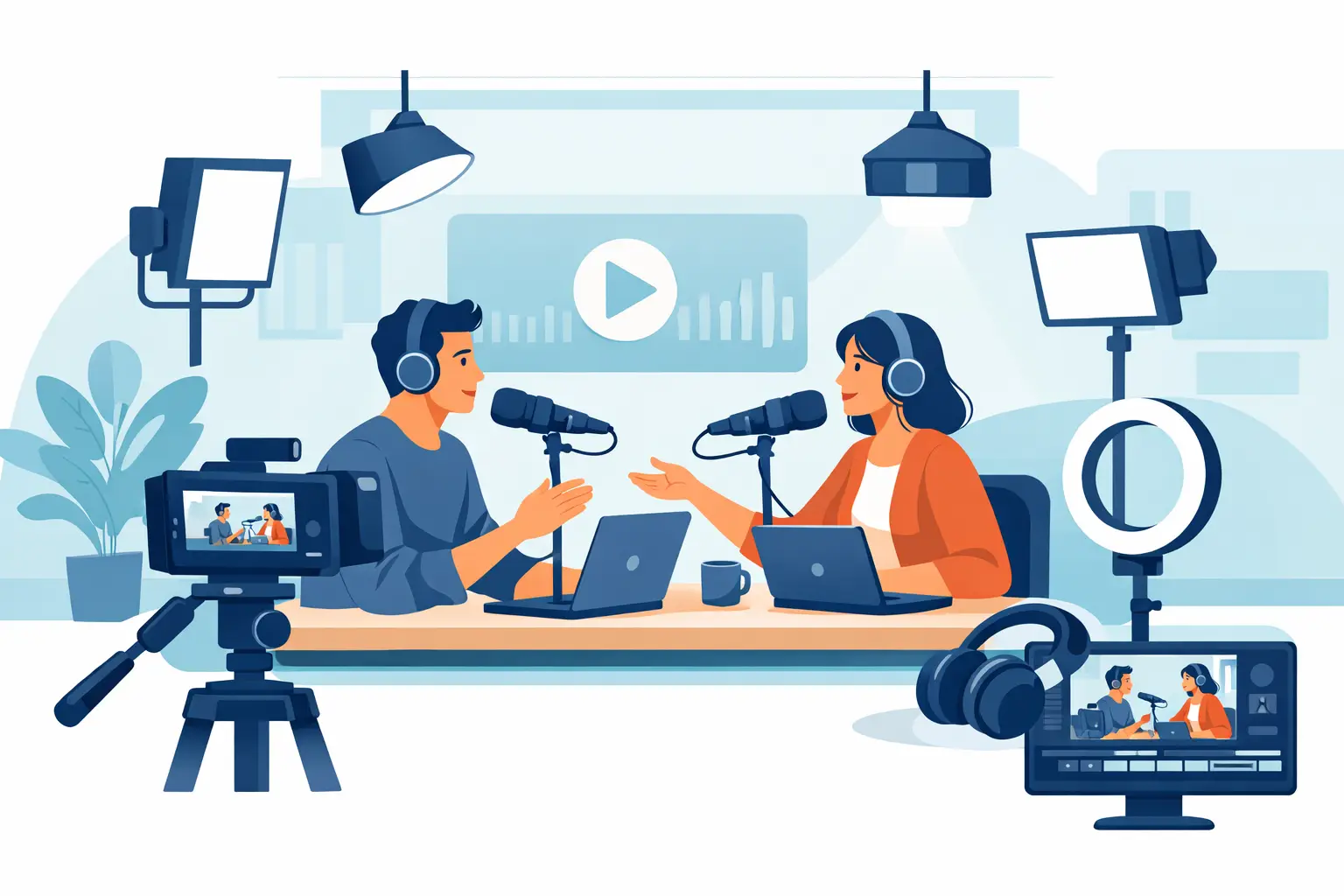
Picture is equally about consistency. A multi-camera setup normally gives an editor a wide two-shot, individual presenter and guest angles, and perhaps a tighter detail frame. This creates rhythm without turning an honest conversation into a frantic montage. The lighting should be shaped for faces, with enough depth in the background to avoid the flat look of a meeting room or kitchen wall.
The room itself has a role to play. A clinical set can suit a formal corporate interview, while a more relaxed studio may help artists, founders and first-time guests share a more natural side of themselves. There is no universal answer. The useful question is whether the setting supports the tone of your show and gives you a look you can return to episode after episode.
Plan the Conversation Before You Book
A studio session works best when it is treated as a production, not merely a room hire. Before booking, decide what the episode needs to achieve. Is it a long-form interview, a panel conversation, a remote guest discussion, a product-led brand piece, or an audio-first podcast that also needs social clips? Each format changes the practical requirements.
A single presenter speaking to camera may need a compact set, clear autocue options and a clean background. A two-person show benefits from enough space for natural seating and camera separation. A panel needs careful microphone choice, more camera coverage and enough time to test sightlines. For music-led podcasts, live performance capture may be part of the brief, which calls for a studio with the room, audio channels and visual flexibility to move beyond seated conversation.
It also helps to think about duration honestly. A 60-minute published episode is not always a 60-minute booking. You need arrival time, microphone fitting, camera and audio checks, a little room for nerves, recording time and a final check before everyone leaves. Guests who are new to being filmed often relax after the first ten minutes. Building that settling-in period into the session is usually worth more than rushing into the first question.
Write a short production brief in advance. Include the show name, episode objective, guest names and pronunciation, preferred framing, any sponsor mentions, key questions, release deadline and the final formats you need. A clear brief lets the studio engineer prepare sensibly and keeps creative decisions from slowing down the session.
Cameras Should Serve the Edit, Not Distract From It
More cameras are not automatically better. Three well-positioned cameras can often produce a stronger podcast than six cameras fighting for attention. The goal is coverage that gives the edit purpose: a wide shot for context, close-ups for emotion and reaction shots for listening.
Camera placement should preserve natural eyelines. If presenter and guest are looking too far away from one another, the exchange can appear detached. If the cameras sit too close to the conversation, people become aware of them. An experienced production team will find a balance between flattering angles, practical access and a relaxed atmosphere.
Ask how the studio records its camera feeds. Individual camera files offer more flexibility in post-production than one pre-cut programme recording, especially if you want short clips, a polished full episode and alternative edits from the same conversation. There is a trade-off: separate feeds create more editing work and can add to the post-production budget. For a quick turnaround show, a live-switched recording may be the right choice. For a flagship interview intended to keep working for months, capturing clean individual angles is usually the wiser investment.
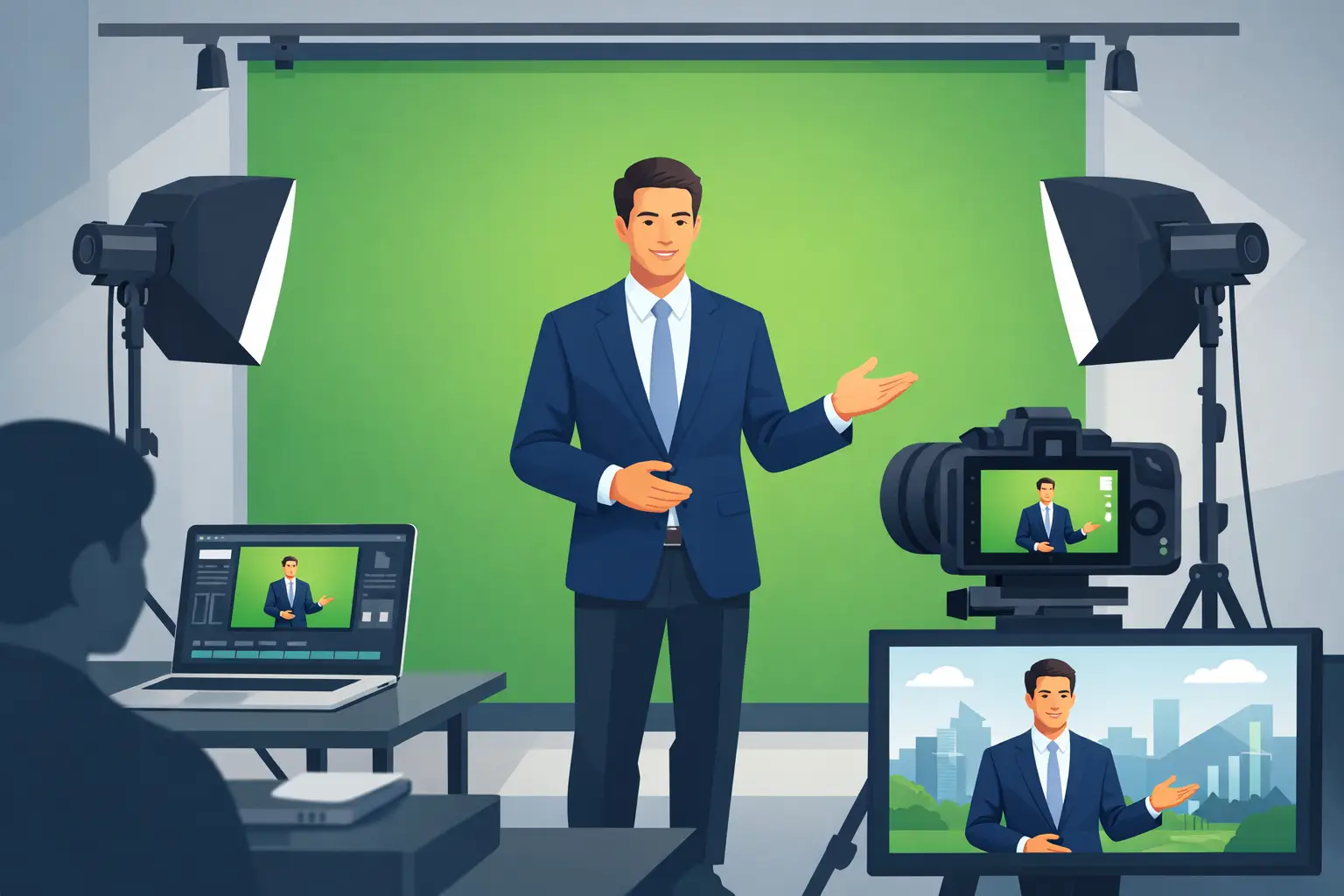
Set design deserves the same thought. A background should add character without dating the episode or pulling focus from the speaker. Plants, artwork, practical lamps, textured surfaces or a view that genuinely belongs to the location can all help. Green screen is useful when a branded or changeable setting is essential, but it needs careful lighting and a clear reason to exist. A convincing real environment often feels warmer for a conversation-led show.
Sound Is Where Credibility Is Won
People judge a show quickly. Clear, present speech makes a podcast feel considered before the listener has formed an opinion about the content. Poor audio suggests the opposite, however good the guest may be.
A professional session should account for microphone technique without making guests feel policed. The right microphone and mounting method depend on the voice, the look of the show, the number of speakers and the amount of movement expected. Visible broadcast microphones can become part of a podcast’s character. Discreet lapel microphones can suit presenter-led video or a more open visual frame. Neither is inherently superior.
Room treatment is the quieter part of the process, but it is vital. Hard surfaces, low ceilings and nearby traffic can give speech a harsh, distant quality. Good acoustic control reduces reflections and allows the voice to sit close and confident in the mix. It is particularly valuable for live broadcasts, where there is less opportunity to repair problems afterwards.
Ask whether the session includes an engineer who is listening throughout. For a simple, repeatable in-house format, self-operated equipment may suit a confident team. For interviews with high-value guests, multiple contributors, a remote caller or live distribution, an engineer gives you freedom to concentrate on the conversation. That is not a luxury if it means the host can listen properly rather than watching audio meters.
Build a Workflow for the Full Episode and the Clips
The recording is only the middle of the job. A useful podcast video recording studio should help you consider what happens once the guest has gone home. You may need an audio master for podcast platforms, a full video episode, captioned vertical clips, a teaser, stills and a version with sponsor graphics or lower thirds.
Planning these outputs at the start changes how you shoot. Vertical clips benefit from tighter compositions and enough picture quality to crop confidently. Captions need clean dialogue and an edit that leaves breathing space around important points. Sponsor reads may require a separate clean take. If a guest makes a claim that needs checking, the editor needs clear notes and an agreed approval process before publication.
Editing style should match the show. Some podcasts need only thoughtful trims, audio balancing, colour correction and simple titles. Others call for graphics, cutaways, archival material, music, animated branding and tighter pacing. There is a cost and a creative trade-off here. Highly produced edits can bring energy, but a heavily interrupted conversation may lose the trust that made people press play. Let the format lead.
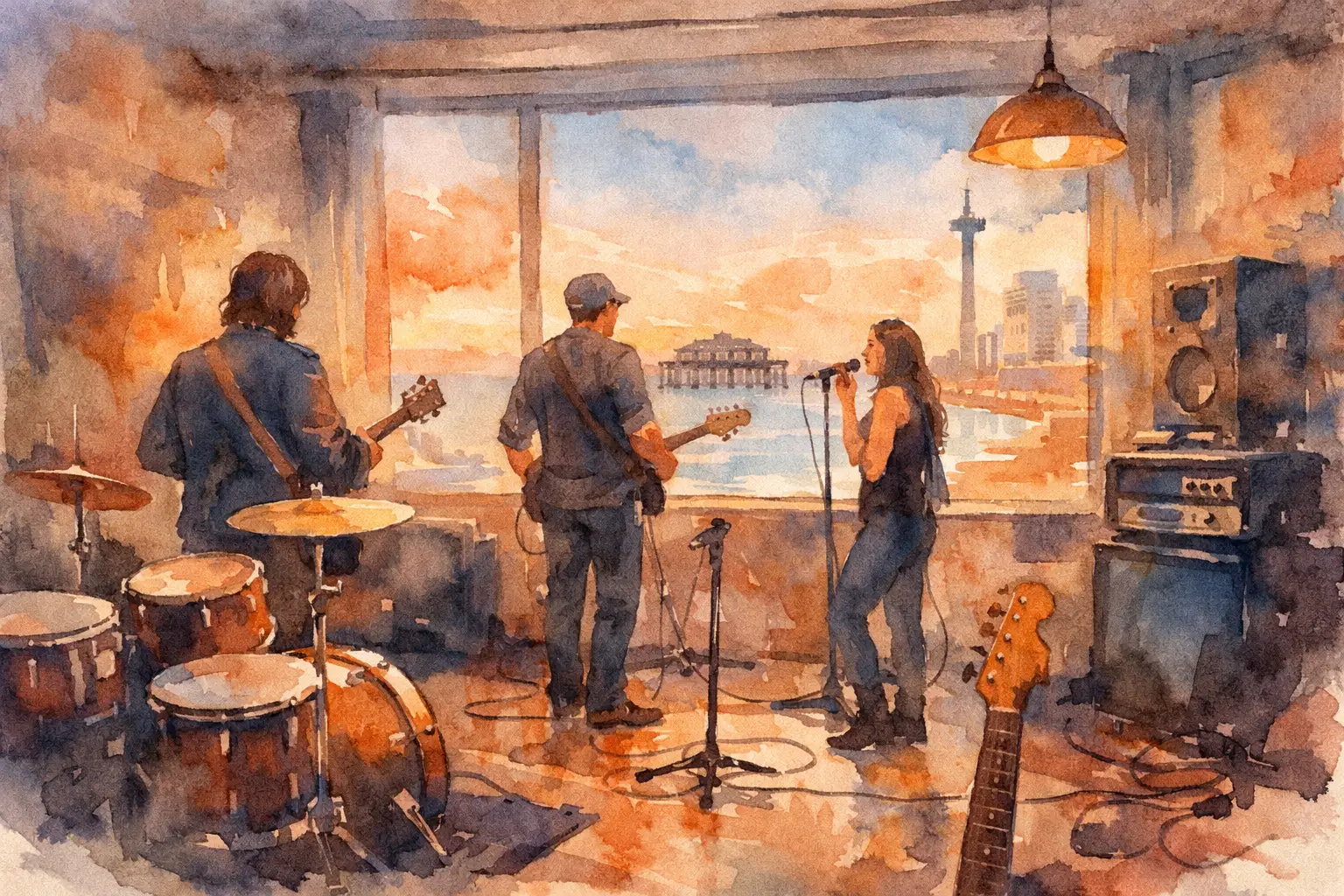
At Yougig, the advantage of bringing recording, multi-camera capture, editing and livestream capability into one waterfront production space is continuity. The people setting the microphones understand how the footage will be finished, and the room can move between intimate interview, performance and presenter-led formats without losing its calm, practical feel.
Choose a Studio That Helps Guests Feel at Ease
Technical standards matter, but so does the welcome. A guest who has travelled from Brighton, London or elsewhere across Sussex may arrive tired, cautious or keen to get through the experience quickly. Clear joining details, somewhere comfortable to wait, time to settle, straightforward guidance and a team that knows when not to interrupt all affect the recording.
This is especially true for artists discussing personal work, founders explaining an idea publicly for the first time, or presenters building confidence on camera. The best sessions do not feel like a test of who understands production jargon. They feel prepared, well-held and enjoyable.
Before committing, ask how the studio handles setup, whether an engineer is included, what formats will be delivered, who owns and stores the files, and how revisions are managed. Those answers tell you far more than a glamorous camera photograph. You are looking for a partner who can protect the technical basics while leaving room for the unexpected moment that makes an episode worth sharing.
Bring a clear idea, allow enough time, and choose a room where your guests can forget the cameras are there. That is when a podcast stops looking like content and starts feeling like a real conversation people want to pass on.