

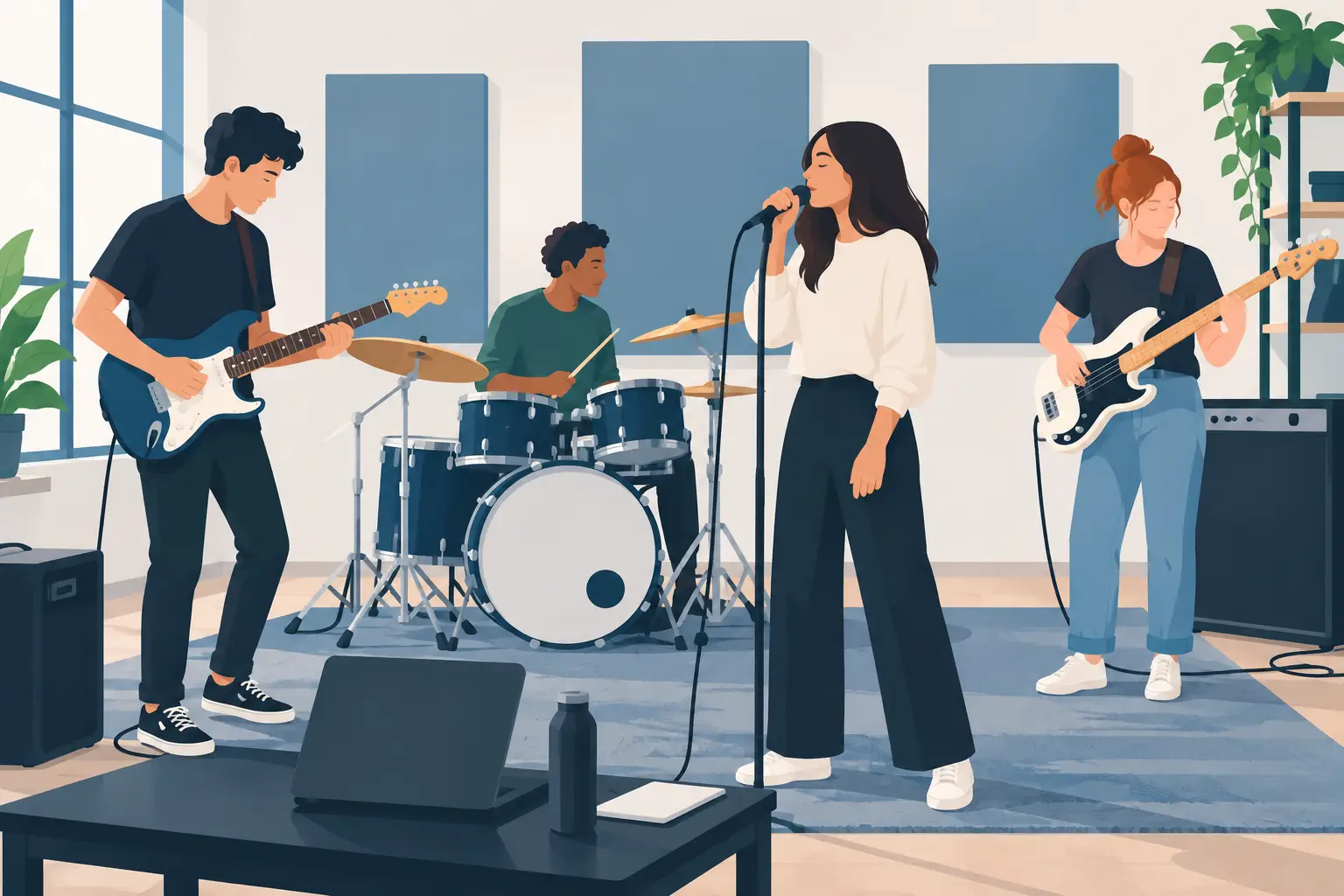
A good rehearsal session workflow is what separates a satisfying noisy afternoon from a session that genuinely moves the band forward. You know the feeling: everyone has played hard for three hours, the room has sounded great, but nobody can agree which ending worked, what tempo the new song settled into, or what needs fixing before the next gig. A little structure keeps the energy in the room while giving it somewhere useful to go.
For bands, vocalists and artist-led projects, rehearsal is not simply preparation. It is where arrangements become believable, transitions become instinctive and individual ideas turn into one shared performance. The aim is not to make the session clinical. It is to remove the small points of friction that interrupt a great take.
Start the rehearsal session workflow before you arrive
The most productive rehearsals begin before anyone plugs in. Send a short message the day before confirming the songs, the purpose of the session and anything each person needs to prepare. That might be learning a revised middle eight, bringing lyrics for backing vocals, or listening to a reference track for the drum feel.
Keep the agenda narrow enough to complete. If you have a two-hour booking, attempting to write three songs, perfect a forty-minute set and learn a cover will usually leave every job half-finished. Pick one primary outcome. Perhaps it is getting four songs gig-ready, finding the right key for a singer, or capturing a live guide recording to take into a production session.
It also helps to agree how decisions will be made. Bands can lose surprising amounts of time debating a cymbal pattern or guitar sound because nobody knows whether the goal is experimentation or a final call. Give a song one or two passes to test an idea, then record a quick reference and move on. You can listen back with fresh ears later.
Arrive ready to make sound
Allow time for loading, setting up and getting comfortable in the room, particularly if you are bringing pedals, keyboards, playback equipment or a more involved drum setup. The first twenty minutes can easily disappear into missing leads, flat batteries and a vocalist trying to remember where they put the lyric sheet.
A simple pre-flight check saves the mood: instruments tuned, power supplies working, set lists printed or visible on one shared screen, water within reach and mobile phones on silent unless they are being used for recording. If somebody is running late, start with a section that the available players can work on rather than waiting in silence.
Build a room sound that supports the song
Rehearsal sound does not need to be album-polished, but it does need to let everybody hear the musical information they require. If the drummer cannot hear the bass, the groove will tighten only by accident. If the singer is pushing to compete with guitar volume, phrasing and pitch will suffer long before their voice does.
Start at sensible levels. Get the drums and bass sitting together, bring in vocals early, then add guitars, keys and playback around that foundation. This is one of the reasons a properly equipped live room matters: you should be able to rehearse loudly without turning every instrument into a volume contest.
There is a trade-off here. A rough, high-energy sound can be brilliant for writing, especially when a band needs to feel the physical impact of a chorus. For detail work, however, turn down a touch. You will hear whether the harmony is actually right, whether the kick pattern matches the riff and whether a lyric is getting lost.
At Yougig, the value of a rehearsal room beside recording and production facilities is that a promising moment does not have to remain a memory. If the arrangement suddenly clicks, it can be captured properly and used as the starting point for a record, performance video or live session.
Work from the whole song to the smallest fix
Play each song once without stopping before you start pulling it apart. That first pass reveals the real shape of the performance: where energy dips, where a transition feels rushed and which section everyone naturally leans into. Stopping every eight bars too early can make a band technically precise but less connected.
After the full run, identify the one or two changes with the biggest effect. Often, the answer is not another layer or a cleverer part. It may be a cleaner count-in, a half-bar of space before the final chorus, or the bass and kick agreeing on one rhythmic figure.
Then isolate the problem section. Loop it slowly, decide exactly what each player is doing, and build back to performance speed. Once it works, rehearse the bars either side of it as well. Many arrangements sound fine in isolation but fail at the join.
Give each pass a job
Repeatedly playing a song from start to finish without a focus can feel productive because it is enjoyable. It is also how the same mistakes become permanent. Before each run, name the job in one sentence: lock the verse groove, test the new harmony, hold back the first chorus, or practise the change between songs.
This approach is especially useful when rehearsing for a filmed performance or livestream. Camera-friendly performances need musical confidence, but they also benefit from planned endings, clear cues and enough space for presenters or performers to reset. You do not need to choreograph every movement. You do need to know where a song begins, how it finishes and who gives the visual cue when something changes.
Capture ideas without breaking the flow
Recording rehearsal is one of the best habits a developing act can build. A basic mobile phone recording is enough to preserve lyrics, tempos and arrangement notes. A multitrack capture goes further, allowing you to listen to the balance, edit a reference mix and hear parts separately after the room has gone quiet.
Do not record everything blindly and create an archive nobody will revisit. Label useful takes as you go. A note such as “Track 3 – bridge version B – strongest vocal shape” is far more valuable than an untitled hour of audio. If someone suggests a variation, record both versions back-to-back and make the decision at the next rehearsal rather than relying on competing memories.
For writers, this protects ownership of those half-formed moments that appear between takes. For performers, it shows what the audience will hear rather than what each person thinks they played. The playback can be revealing, occasionally humbling and nearly always useful.
Finish with a reset, not a rushed exit
Reserve the final ten minutes for a calm review. Talk through what was completed, what remains open and what everyone should prepare next. Keep it practical. “The second verse needs fewer guitar notes” is actionable. “It still feels a bit off” is a starting point, not a plan.
Write down the agreed tempo, key, arrangement changes and any decisions about intros, endings or backing vocals. If you are working towards recording, make a note of which song is closest to being ready and which elements still need development. If the target is a live show, run the opening and closing moments of the set once more. Those are the places where confidence makes the strongest first and last impression.
Pack down with the same attention you gave the setup. Check that recordings have saved, collect cables and pedals, and send the session notes while the details are fresh. A shared folder or group message is enough, provided it has one clear version of the truth.
The best rehearsal leaves you with more than tired arms and ringing ears. It leaves every player knowing what changed, why it changed and what to bring back into the room next time. Give the session that clarity, then leave enough space for the unexpected moment that makes the song yours.