

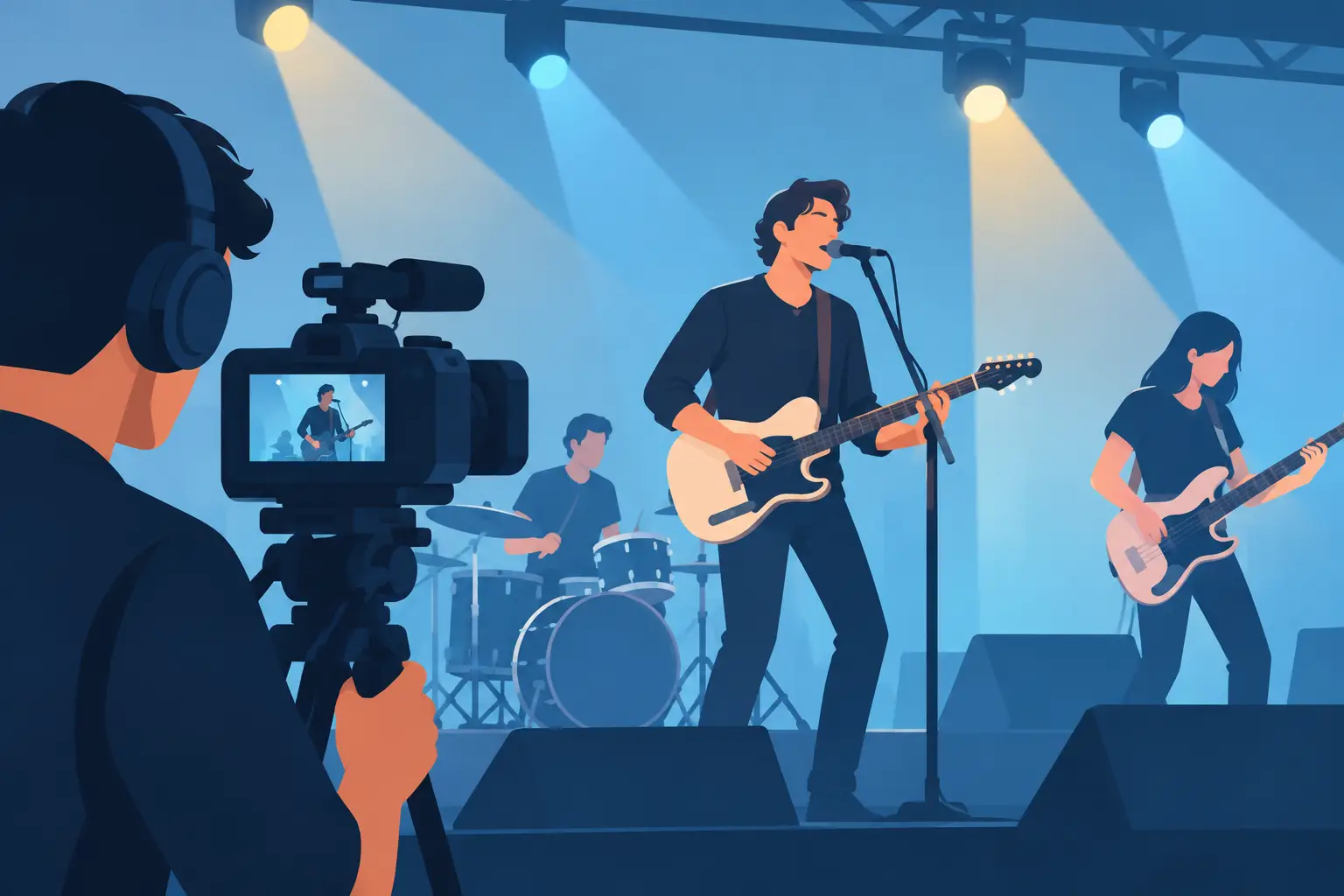
A great live video is not a music video with fewer locations. It is the feeling of a real take – the breath before the first note, the drummer counting in, the glance that holds a chorus together. This live performance video guide is for artists who want to capture that energy without leaving the result to chance.
For a solo vocalist, a six-piece band or a presenter-led acoustic session, the strongest films are planned around one simple idea: make the performance easy to believe. That means giving the musicians a comfortable room, recording sound properly, placing cameras with purpose and leaving enough time for a take that feels lived-in rather than overworked.
Start with the job the video needs to do
Before choosing lenses, lights or a platform, decide what this performance needs to achieve. A release clip for a new single needs a clear visual identity and a strong opening few seconds. A session for promoters may need to prove that the band can deliver live. A social clip can be more immediate and vertical-led, while a full song on a video channel benefits from a wider frame and a patient edit.
The answer affects almost every production choice. If the goal is a one-take performance, camera movement and lighting changes need to work in real time. If the aim is to create a polished live film from several takes, you have more freedom to cut between angles and refine the performance. Neither route is more authentic. The right one is the one that matches the song and is clear with the audience.
Choose the track carefully too. The newest song is not always the best session song. Look for a natural dynamic arc, a memorable first line and a moment where the arrangement opens up visually. Dense, fast material can look brilliant, but it asks more of the camera team and makes editing less forgiving.
A live performance video guide begins with sound
Viewers will forgive a shadow. They will not stay with harsh vocals, a thin backing track or a kit that sounds like it is in a different room. Record multitrack audio wherever possible, even when the video is intended to feel raw. Individual tracks give you control over vocal balance, bass weight, guitar tone and audience-free room sound once the cameras stop rolling.
Keep a guide mix in the room that performers can trust. If artists cannot hear themselves, posture changes, timing tightens and the delivery becomes cautious. Headphones or in-ear monitoring may be useful for a stripped-back session, while a properly managed live-room mix can feel more natural for a full band. It depends on the arrangement, the room volume and whether the performance is being streamed as it happens.
Talk through the balance before recording. Lead vocal intelligibility is usually non-negotiable, but it should not sit on top of the band like a separate recording. Ask whether the kick needs to drive the song, whether the bass is melodic or purely supportive, and whether a guitar part is the hook people will remember. These are musical decisions, not just technical settings.
Record a clean room tone after the final take as well. Thirty seconds of the space with nobody playing can make edits and transitions feel far more natural.
Build camera coverage around the arrangement
Multi-camera coverage is valuable because it lets the edit follow the music. The aim is not to point every camera at every person all the time. It is to give each section of the song a useful choice.
A dependable starting point is a wide master shot that holds the whole performance, a close camera for the lead artist, and an angle that can find instruments, hands and reactions. For larger groups, add coverage for the drummer or the musician carrying the musical hook. Keep the master running from beginning to end. It is the safety net that protects a brilliant take when another angle is blocked, soft or badly timed.
Plan where the cameras will live before the room fills with stands and cables. A close-up beside the vocalist may look beautiful until it prevents the bassist from seeing a cue. A camera behind the drummer can add scale, but it may catch too much glare from cymbals. Small compromises made early save an enormous amount of repair work later.
Make a short shot plan with the song structure in mind. Verse one might favour the singer and close details. The first chorus can open to a wider view. An instrumental section is the moment to show the player doing the work, rather than cutting back to the vocalist out of habit. If the performance builds, let the pictures build with it.
Light faces, then shape the room
Lighting should make the artist look present without flattening the atmosphere. Start by ensuring faces are readable and eyes have some life in them. Then use background light, practical lamps, coloured accents or controlled shadow to create depth.
Avoid treating colour as decoration. A cool wash can suit an intimate electronic track; it can also make skin look lifeless if it is the only source. Warm light can feel welcoming, but too much amber quickly turns muddy on camera. Test the look through the actual cameras, not only with your eyes in the room.
Windows add another consideration. Daylight can be gorgeous in a waterfront setting, but it changes quickly, especially on the south coast. If continuity matters, control the daylight or schedule the shoot around it. For a deliberately natural, daytime session, embrace the changing view but accept that a cut between takes may reveal it.
The room should support the performance rather than compete with it. A few considered textures, visible instruments and a sense of place are more convincing than a crowded set full of unrelated props.
Rehearse the filming, not just the song
Even highly experienced musicians benefit from one complete rehearsal with the cameras in position. This is where you discover that a guitarist faces away during the solo, a singer steps outside the best light, or a keyboard player is hidden whenever the chorus lands.
Agree on simple performance choices rather than asking people to act. Where should the lead singer look for the opening line? Which player receives the visual focus in the middle eight? Is there a natural moment for the group to connect with each other? These prompts keep the performance grounded. Over-directing usually produces a stiff session.
Allow time for several full takes. The first is often about settling into the room. The second may be technically strongest. A later take can carry the looseness and confidence everyone hoped for. Do not stop just because one version is correct. Stop when the song feels like it has something at stake.
If the session is livestreamed, the approach changes slightly. There is no opportunity to rebuild the final version from the best moments of four takes. Camera operators need clear cues, the stream mix needs to be checked in advance, and a reliable connection matters as much as the creative plan. A short private test broadcast is worth doing before inviting viewers in.
Edit for the listener, not for the camera reel
Once the audio mix is taking shape, edit the pictures to the finished musical performance. Sync every camera carefully, then use the strongest take as the foundation. If you combine takes, watch hands, drum hits and mouth movements closely. A cut can hide a tiny mismatch; a lingering close-up will expose it.
Resist cutting on every beat. Fast editing can give an energetic song momentum, but constant switching makes it harder to feel the musicianship. Hold a shot when an expression is landing. Stay with a player through an important phrase. Cut when the music changes direction or when the viewer needs new information.
Colour grading is the finishing stage, not a rescue plan. Aim for consistency between cameras, natural skin tones and a look that serves the track. Keep an eye on dark clothing, bright LEDs and coloured stage lights, which can all lose detail quickly.
Create the right versions after the main film is finished. A horizontal full performance may be the centrepiece, while a vertical excerpt introduces the chorus to new listeners. Captions can help short clips travel further, particularly when lyrics or spoken introductions matter. Keep titles and graphics restrained so the performance remains the point.
At Yougig, a live room, multitrack recording, multi-camera capture and post-production can sit within the same creative process, so artists can stay focused on the take rather than moving a half-finished idea between suppliers.
The best live performance video does more than document a song. It gives someone who has never seen you play a reason to believe they should come and see what happens next.