

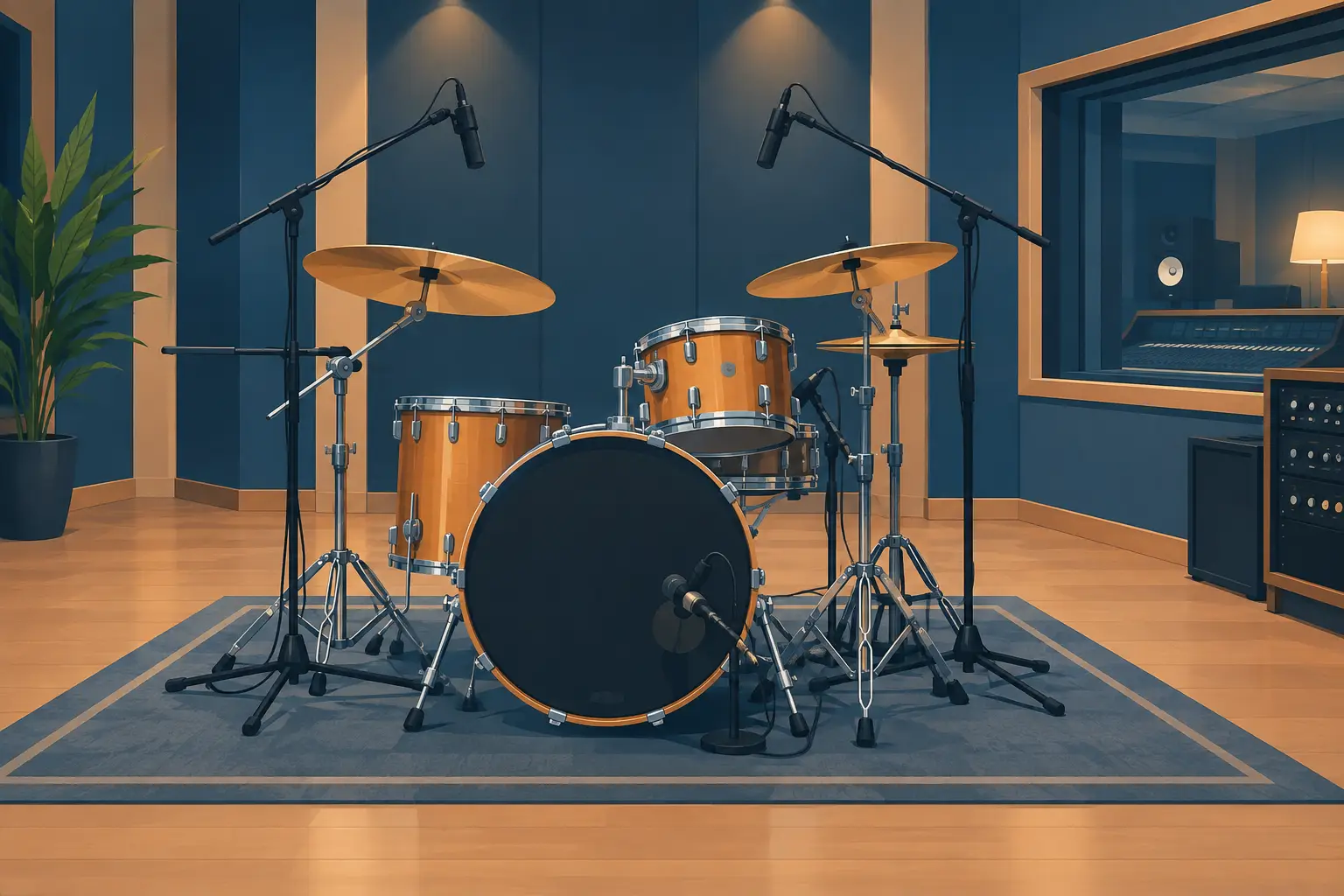
A great drum take is physical. It is the kick drum moving air, the cymbals opening up at exactly the right moment, and a player feeling confident enough to stop thinking about the red light. Drum recording studio hire should give that performance room to happen, not force it into a cramped, over-treated space or a rushed setup.
For bands, solo artists and producers, recording drums is often the point where a track stops being a demo and starts sounding like a record. It also tends to be the session that needs the most planning. The room, kit, microphones, engineer, headphone mix and schedule all affect the result. Get those basics right and the session can feel surprisingly relaxed.
What to look for in drum recording studio hire
The first question is not simply whether a studio has microphones. Most professional rooms do. The useful question is whether the live room suits the sound you want to make.
A lively room can give a rock, indie or soul recording scale and character, with room microphones adding movement around the close-miked kit. A more controlled room can be the better choice for detailed pop production, tightly edited arrangements or voice-led tracks where the drums need impact without a long natural tail. Neither approach is automatically better. It depends on the song, the drummer and how much of the sound you want to commit to on the day.
Space matters too. A drummer needs enough room to play without feeling boxed in, while the engineer needs enough separation and control to capture clean, flexible tracks. If the whole band is recording live, ask how sightlines, spill and headphone monitoring will be managed. A little spill can make a performance feel connected. Too much can limit editing and overdubs later.
A serious recording space should also have a proper monitoring and control setup rather than treating the live room as an afterthought. The best sessions move easily between playing, listening back, making a small adjustment and going again. That flow keeps a band focused on the music rather than waiting around while technical decisions are made.
The room is part of the instrument
Drums do not sound the same in every space, even with the same player, kit and microphones. Ceiling height, surfaces, absorption and room dimensions all shape the low end, cymbal detail and sense of depth.
Before booking, describe the references you have in mind in practical terms. Do you want a dry, punchy snare that can sit under dense guitars? A broad, open kit for a live session video? A close, modern sound with enough room ambience to blend in later? These descriptions give an engineer something useful to work from. Naming a favourite record can help too, but the aim is to identify qualities rather than chase an identical sound.
Decide whether to bring your own kit
Your own drums are familiar. You know the response of the heads, where the snare sits under your hands and how hard you can lean into the cymbals. That comfort often produces a better performance, especially if you have recently rehearsed the material on that kit.
Still, the condition of the instrument is more important than its history. Worn heads, rattling hardware, poorly seated cymbals or an unfocused kick drum can cost valuable session time. Fresh heads are not compulsory for every recording, but if the current set has had a long rehearsal life, changing key batter heads before the session is usually sensible. Bring a tuning key, spare snare wire straps or cords if you use them, sticks, mallets and any percussion that belongs in the arrangement.
If hiring or using a house kit, ask what is included and what you should bring yourself. Cymbals are particularly personal, so many drummers prefer to bring their own even when using a studio shell pack. It is worth agreeing the setup in advance, especially if you need a left-handed layout, double pedal, auxiliary snare, electronics or a larger cymbal arrangement.
Prepare the songs before the clock starts
The most cost-effective recording day is not the one with the shortest booking. It is the one where the band arrives able to make decisions quickly.
Rehearse the exact arrangements you intend to record. That means agreeing where fills land, whether the final chorus lifts, how long the intro lasts and what happens after the last hit. If a part is meant to feel loose, decide what the band is being loose around. A shared map prevents the kind of vague uncertainty that leads to twenty near-identical takes.
Tempo deserves attention. Even players with excellent internal time can benefit from testing each song against a click before the studio date. You may decide to record to one, use a simple guide percussion track, automate tempo changes or avoid a click entirely. The right choice is musical, not ideological. A song that pushes and pulls naturally may lose life when forced to a grid, while a production built from layers and edits will be easier to finish if its foundation is stable.
Send rough demos and notes ahead where possible. Include the song order, tempos, keys, arrangement notes and any moments that need special attention. If there is a reference for the drum sound, mention it. A little preparation lets the engineer plan microphone choices and session layout before you step aboard.
Work with the engineer, not around them
An experienced engineer is listening for more than a technically clean signal. They are judging tuning, balance across the kit, cymbal volume, pedal noise, phase relationships and how the drummer’s dynamics translate into the room. Their job is not to remove personality. It is to capture it in a form that will still work once guitars, vocals and production choices arrive.
Use the soundcheck to play as you will perform. Do not tap the snare delicately and then hit it twice as hard on the take. Play a verse, chorus and fill with proper intent so levels and microphone placement can be set for the reality of the song.
Be open to small changes. Moving a ride cymbal, damping a ringing tom, changing snare tuning or shifting the kit a little in the room can solve an issue faster than trying to repair it later in the mix. Equally, say something if the monitoring is not working for you. A drummer who cannot clearly hear the click, guide track or talkback is being asked to perform with one hand tied behind their back.
At Yougig, a large live recording room and dedicated digital mixing suite make it possible to track drums with the attention they need, then assess the result properly before committing to the next song. For projects that need more than audio, the same performance can also be planned as a multi-camera capture rather than recreated after the fact.
Allow enough time for setup and real performances
A drum session has a rhythm of its own. Load-in, building the kit, tuning, microphone placement, line checks and headphone mixes happen before the first usable take. Rushing this stage is a false economy, particularly if you are recording several songs.
For a focused single, you may be able to set up, capture the main take and record alternatives in one well-planned session. An EP or album deserves more breathing room. Some songs settle after a few takes; others reveal a problem only when the full arrangement is played at performance level. Build time for listening back, breaks and a second attempt after a useful adjustment.
It is also wise to record options while the kit is miked up. Capture a clean ending, a separate cymbal swell, a tom fill without the band, or a simpler verse pattern if the arrangement is still evolving. These are not signs of indecision. They are practical choices that can save a return booking during editing and mixing.
Think beyond the recording day
Ask what you will receive at the end of the session and how the files will be organised. Clearly labelled multitrack audio gives you freedom to mix elsewhere, revisit the track later or share the project with collaborators. If the studio is mixing the track, talk about the intended direction early, including how natural or processed you want the drums to feel.
Video can be worth considering at the same time. A compelling live drum performance is valuable material for release campaigns, social clips, electronic press kits and content that shows a real band playing rather than another static studio image. Capturing it on the day is usually more honest and efficient than miming to a finished track weeks later.
The right studio hire is not just a room booked by the hour. It is a chance to create a dependable foundation for the entire record. Arrive prepared, give the drummer time to settle, and leave space for the unexpected take that makes everyone in the control room look up.