

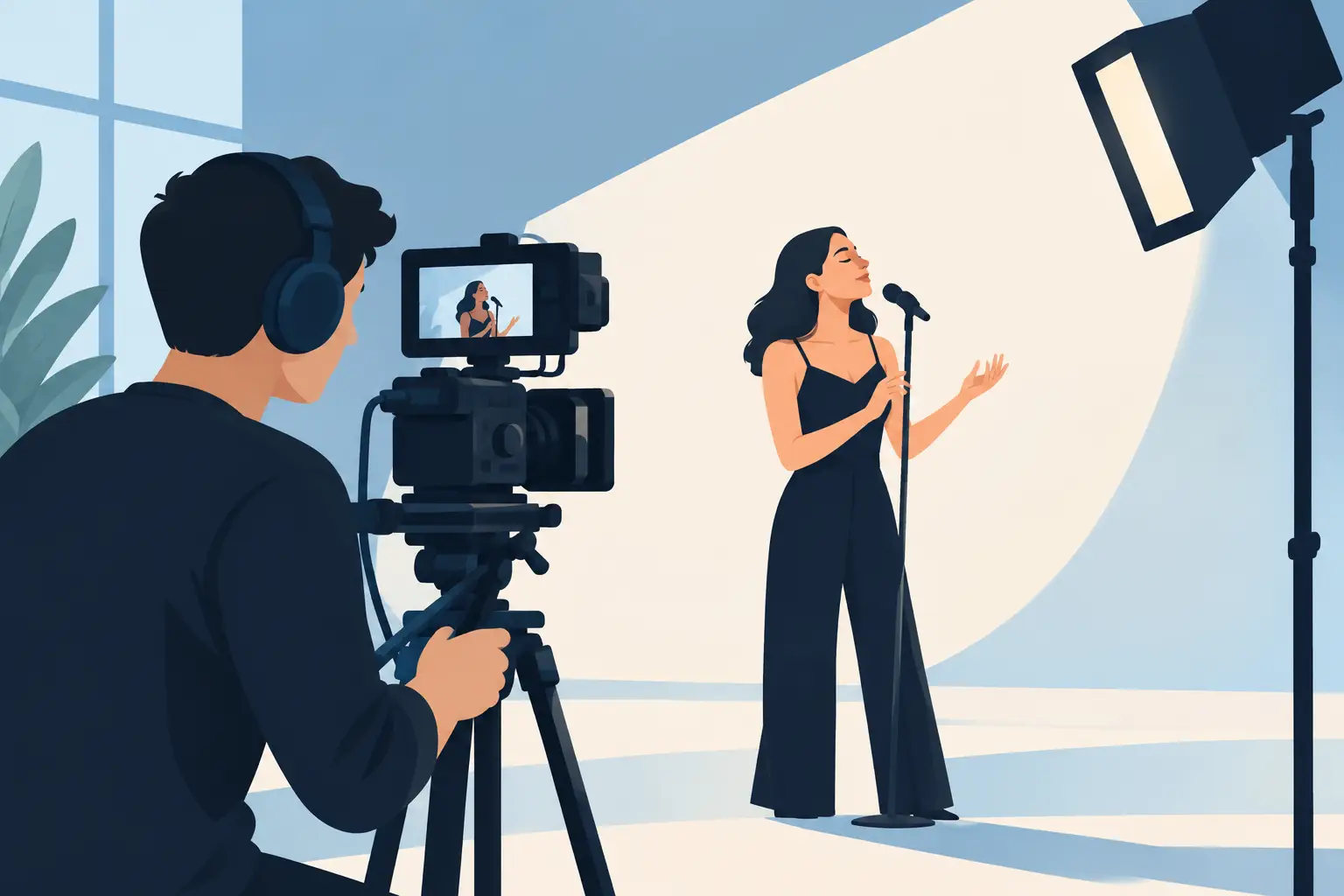
A great performance can disappear surprisingly quickly once a camera is switched on. The room feels different, a singer starts watching themselves in the monitor, or a band that sounded huge in rehearsal suddenly plays safe. Good video production is not about making every frame look expensive. It is about building a setup that lets the person in front of the lens forget the setup is there.
For musicians, presenters, podcasters and independent brands, that usually means making a few smart decisions before recording starts: what the viewer needs to feel, what must be heard clearly, and where the finished film will actually live. A full live session, a presenter-led green-screen piece and a social campaign may all use cameras, lights and editing, but they need very different approaches.
Video production starts before the cameras roll
The strongest shoots begin with a clear purpose, not a shopping list of equipment. Ask what one successful viewer should do after watching. They might listen to a new release, buy a ticket, understand a service, trust a spokesperson, or simply stay long enough to share the clip. That outcome shapes every creative choice that follows.
For a band, the brief may be to capture the energy of playing together in one room. In that case, the production should protect the performance: enough camera coverage to give the edit movement, clean multitrack audio for control later, and lighting that adds atmosphere without turning a rehearsal into a photo shoot.
For an interview, clarity may matter more than spectacle. A well-framed contributor, flattering soft light, consistent sound and an uncluttered background can carry the whole piece. For a product demo or presentation, a green screen can be useful when the background needs to change between versions, but only if the presenter is lit separately and the final visual treatment has been planned from the beginning.
A useful pre-production conversation covers the running order, wardrobe, intended platforms, key messages, references and deadlines. It also identifies practical issues early: how loud the room will be, whether playback is required, how many people are on set, and whether a live stream needs a reliable fallback recording. These details are not glamorous, but they are where calm sessions are won.
Choosing the right video production format
Not every project needs a large crew or a complicated set. The right format is the one that serves the audience and can be delivered consistently within the available time and budget.
A multi-camera live performance is ideal when the interplay between performers matters. Wide shots establish the room and the group, while tighter angles catch hands, expressions and musical cues. Recording the cameras at the same time as multitrack audio gives the editor options without asking artists to mime repeatedly. The trade-off is that camera positions, sightlines and lighting need more preparation, particularly in a busy live room.
A single-camera film can be more intimate. It works beautifully for an acoustic session, a stripped-back vocal, an artist introduction or a thoughtful interview. It is often faster to set up, although it may require several takes or a more deliberate edit if the finished piece needs visual variety.
For regular social content, the most efficient route is often to record a batch of short, focused pieces in one session. A creator might film an introduction, three tips, a performance excerpt and a callout for an upcoming release while the lights and sound are already set. Consistency across those clips helps an audience recognise the work, without making every post feel identical.
Livestreaming has its own demands. Viewers will forgive an occasional imperfect camera angle more readily than broken sound or a stream that drops halfway through. A proper live workflow needs monitored audio, tested internet, platform settings checked in advance, clear cueing and a recording of the programme where possible. The value of a live broadcast is its shared moment, so preparation gives everyone room to enjoy it.
Audio is half the picture
A film can survive a deliberately grainy image. It rarely survives muffled dialogue, harsh vocal sibilance or a live band mix that turns to mud on a mobile phone speaker. That is why serious video work for music and spoken word should treat sound as a production department, not an afterthought.
For performance video, recording each source separately makes a major difference. Vocals, guitars, bass, drums and playback can be balanced after the session rather than being locked into one room mix. A musician can then focus on delivering the song, while the final audio is mixed for the way viewers will listen: headphones, televisions, laptops and small mobile phone speakers.
Dialogue needs similar care. The best microphone depends on the setting. A discreet lavalier can suit a moving presenter, while a boom or close studio microphone may sound more natural for a seated interview. The room matters too. Hard surfaces can create reflections that make speech feel distant, whereas thoughtful positioning and acoustic control bring the voice forward.
At Yougig, the advantage of bringing recording and camera work together is simple: the sound and pictures are planned as one performance rather than stitched together afterwards. That matters whether the project is a loud full-band session, a beatbox showcase, a podcast film or a branded interview.
Build a set that supports the person on camera
There is a temptation to fill every corner of a frame with props, coloured lights and visual effects. Sometimes that is exactly right. A high-energy music video may need bold colour and movement; a launch film may need a carefully styled set. But visual interest should guide attention towards the performer or message, not compete with it.
Start with the background. A real studio space can add texture and credibility for artists, while a clean backdrop keeps the focus on a presenter. Green screen is especially useful when one recording needs several branded environments, graphics or locations. It is less useful when a natural setting would make the piece feel warmer and more believable.
Lighting should create separation and mood, while keeping faces readable. A key light gives the subject shape, a softer fill controls heavy shadows, and a back or edge light can lift them away from the background. The exact balance depends on the desired feel. A moody live session can carry more contrast than an instructional video, where viewers need to see expressions and details clearly.
Comfort is part of the technical plan. Give performers time to settle into the room, rehearse to the camera, check their framing and hear a playback they trust. The best take is often not the first technically correct one. It arrives after the performer has stopped thinking about the lens.
The edit is where the pace becomes clear
Editing is not merely trimming the beginning and end of a recording. It is where the film finds its rhythm. For music, cuts can follow the arrangement, a drum fill, a glance between players or the shift from verse to chorus. For interviews and promotional content, the edit should remove hesitation without stripping away the speaker’s personality.
It helps to decide early how long the film needs to be. A full performance might deserve four minutes. A teaser may only need fifteen seconds to earn a click. Trying to make one edit serve every platform usually produces a compromise, so it is often worth planning a main version alongside shorter vertical or square cutdowns.
Colour finishing also deserves attention. Cameras interpret skin tones, coloured stage lights and mixed daylight differently. A careful grade brings shots together, protects natural complexion and supports the intended atmosphere. The goal is not to make everything look artificially glossy. It is to make the image feel intentional.
Captions are equally practical. Many people first encounter video with sound off, particularly on social platforms. Clear captions make spoken content easier to follow and make a performance clip more accessible when lyrics or introductions carry the story. Keep them accurate, timed properly and placed where they do not cover important action.
Make room for the unexpected
The most memorable moment in a session is not always on the call sheet. It might be a laugh after a missed cue, an improvised ending, a presenter finding a more natural phrase, or a band landing a take with the kind of shared look that cannot be staged. A tightly organised production creates enough control to capture those moments rather than missing them.
That balance is worth protecting. Plan the camera coverage, check the audio, test the lights and know the deliverables. Then leave enough space for people to perform like people. When the room feels relaxed and the technical foundations are solid, video becomes more than proof that something happened. It gives an audience a reason to feel they were there.