

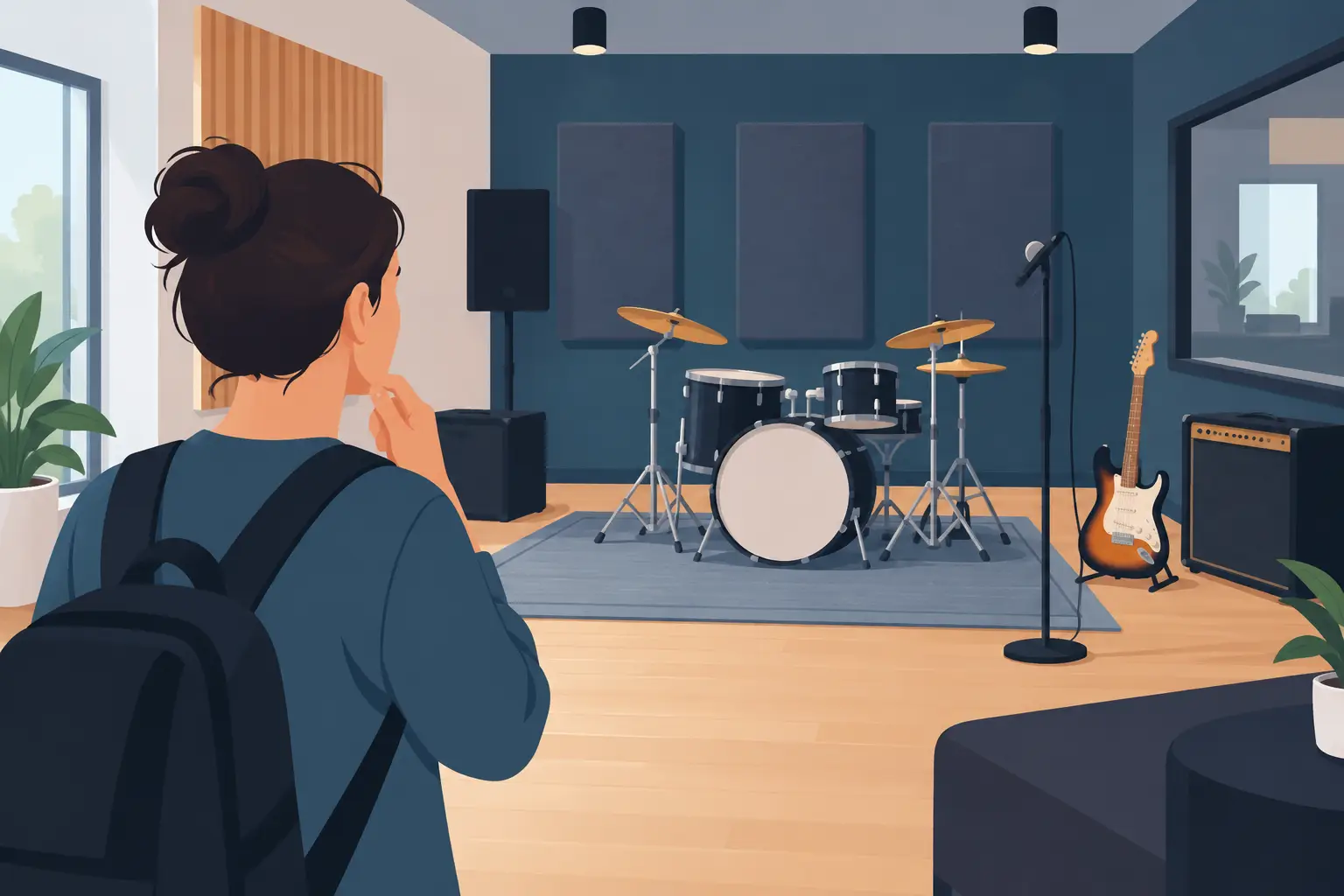
A rehearsal studio should do more than contain the volume. It should let a band arrive, plug in, settle quickly and spend its precious time playing rather than chasing a buzz, moving furniture or wondering whether the vocal can be heard. For a solo artist, rapper, beatbox performer or presenter, the same principle applies: the room needs to make the work feel possible.
The right space can change the shape of a session. Ideas hold together for longer. Arrangements become clearer. A rough chorus can turn into a performance worth recording. That is why choosing a rehearsal room is not simply about finding the lowest hourly price or the nearest postcode. It is about finding a reliable creative base that suits how you actually work.
Start with the session you need
Before comparing rooms, be honest about the purpose of the booking. A band preparing for a run of live dates needs different things from an artist developing new material, and both have different priorities from a creator filming a live session or a presenter rehearsing a piece to camera.
If you are rehearsing for the stage, focus on whether the space can handle your real-world setup. Can everyone play at performance volume without the drums swallowing the vocals? Is there enough room to stand as you will on stage, including pedalboards, stands, keys and instruments? A cramped room may be fine for writing, but it can give a false sense of how an arrangement will land in front of an audience.
For songwriting and pre-production, comfort and clarity often matter more than sheer size. You may want time to try a different tempo, rebuild a middle eight or work through harmonies without feeling rushed. A room that sounds balanced at a sensible volume is far more useful than one that encourages everyone to play harder just to hear themselves.
If there is even a chance you will want a polished recording or video later, ask what can happen in the same space. Moving a session to another location can break momentum. A rehearsal that can develop naturally into multitrack recording, live video capture or a filmed performance gives you more options without forcing you to commit before the song is ready.
What good rehearsal studio sound feels like
You do not need to be an acoustician to judge whether a room is working for you. Play together for ten minutes and listen to what is difficult. Are vocals disappearing? Does the kick drum blur into the bass? Do cymbals become harsh when the whole band comes in? Can the guitarist hear the difference between a useful tone and a louder one?
A well-considered rehearsal studio does not have to feel clinically silent. It should simply make it easier to hear the decisions that matter. You should be able to stop after a run-through and say, “the second verse needs less guitar”, rather than, “I could not hear the second verse at all”.
Room treatment, sensible speaker placement and adequate monitoring all play a part. So does the person setting up the session. An experienced engineer or studio owner can often solve a problem with a small adjustment to amplifier direction, drum positioning or monitor level. That kind of practical support is especially valuable when you are working on a tight schedule.
There is a trade-off, of course. A deliberately lively room can make a band feel exciting and immediate, while a more controlled space can reveal flaws with less mercy. Neither is automatically better. What matters is whether the room helps you rehearse honestly for the performance or recording you intend to make.
Volume is not the only measure
Many musicians look for a place where they can play loud. That matters, particularly for full bands, but useful volume is more than decibels. The best sessions have enough headroom for energy while still leaving space for detail.
Ask whether vocal microphones and PA are available, whether drum kit and backline can be provided if needed, and what you are expected to bring. Useful kit can make a rehearsal simpler and cheaper, particularly when several people are travelling from Brighton, Shoreham, London or further across Sussex. But supplied equipment is only helpful when it is maintained, clearly listed and appropriate for the room.
Check the practical details before you book
A good room can be undermined by a difficult arrival. If a four-piece band needs to carry instruments, stands and a drum breakable through awkward access, that needs to be known in advance. The same goes for parking, loading, session hours, noise restrictions and whether there is enough setup time within your booking.
Do not assume every studio works in the same way. Some rehearsal hire is self-service, which suits experienced acts who know exactly how they want to set up. Other sessions include technical help, and that can be the better value when you are recording, filming, livestreaming or trying an unfamiliar configuration.
It is worth asking a few direct questions before committing:
- What is included in the hourly rehearsal rate, and what is charged separately?
- Is the room available for the volume and duration your session requires?
- Can you record a reference take, multitrack the session or add video if the performance comes together?
- How much time should you allow for loading in, setup and packing down?
Clear answers prevent the awkward end-of-session scramble. They also let you budget properly. The cheapest room can become poor value if you spend half the booking setting up equipment, while a slightly more capable space may save money by making the session more focused.
Rehearsal, recording and video work better together
The line between rehearsal and production is often thinner than artists expect. A scratch vocal made during practice may capture the emotion missing from a later retake. A live arrangement can reveal its identity when the full band plays it in one room. A short performance video can give promoters, fans or collaborators a far better sense of a project than a phone clip from the corner of a rehearsal space.
That does not mean every practice needs to become a production day. Sometimes the right move is to leave the mics off and work through the difficult parts. But it helps to have the option to capture a moment when it arrives.
At Yougig, the live-room setting is designed around that flexibility: rehearsals can remain straightforward self-service sessions, while recording, multi-camera filming and livestream work can be planned with an engineer when the project calls for it. The surrounding waterfront setting also creates a useful contrast to the usual windowless rehearsal block. Step aboard, switch off the noise, then get on with the work.
For creators, this joined-up approach is particularly useful. A podcast host can rehearse delivery before recording an episode. A musician can track a live take, then move into editing and mixing. A presenter can use a green-screen setup for a focused piece to camera without trying to build a production space at home. Keeping these stages close together protects flow and reduces technical friction.
Choose a room that suits your people
The room is part of the atmosphere of a session. If your drummer feels policed, your singer cannot find a comfortable monitor level, or the person running the booking is impossible to reach, the group will notice. Creative work is exposed work. People perform better when the practical side feels calm, respectful and under control.
That does not mean you need constant intervention. Most artists value autonomy. The sweet spot is a space where you can take charge of your own rehearsal, with knowledgeable support nearby when a cable fails, a routing question arises or a recording plan needs shaping.
For newer acts, that support can shorten the learning curve without making anyone feel out of their depth. For established performers and commercial clients, it means confidence that the session will run professionally. The same standard matters whether you are preparing your first local set, recording a release, producing branded content or broadcasting to an audience beyond the room.
Book for momentum, not just availability
A single rehearsal can be useful. A regular slot can be transformative. When a group returns to a familiar room, setup gets faster, mix preferences become known and less energy is spent re-establishing the basics. That leaves more time for the things audiences actually notice: timing, dynamics, confidence and connection.
Still, routine should not become automatic. If the room no longer fits the project, move on. A duo adding electronic production may need better monitoring. A band heading into a video campaign may need space for cameras and lighting. An artist preparing an acoustic release may benefit from a quieter, more detailed recording environment. The best rehearsal studio is the one that fits the work in front of you, not the one you booked by habit.
Bring a clear goal to your next session, leave a little time for unexpected ideas, and choose a room where the practical details disappear into the background. When the space is right, rehearsal stops feeling like preparation for the real thing. It becomes where the real thing starts.