

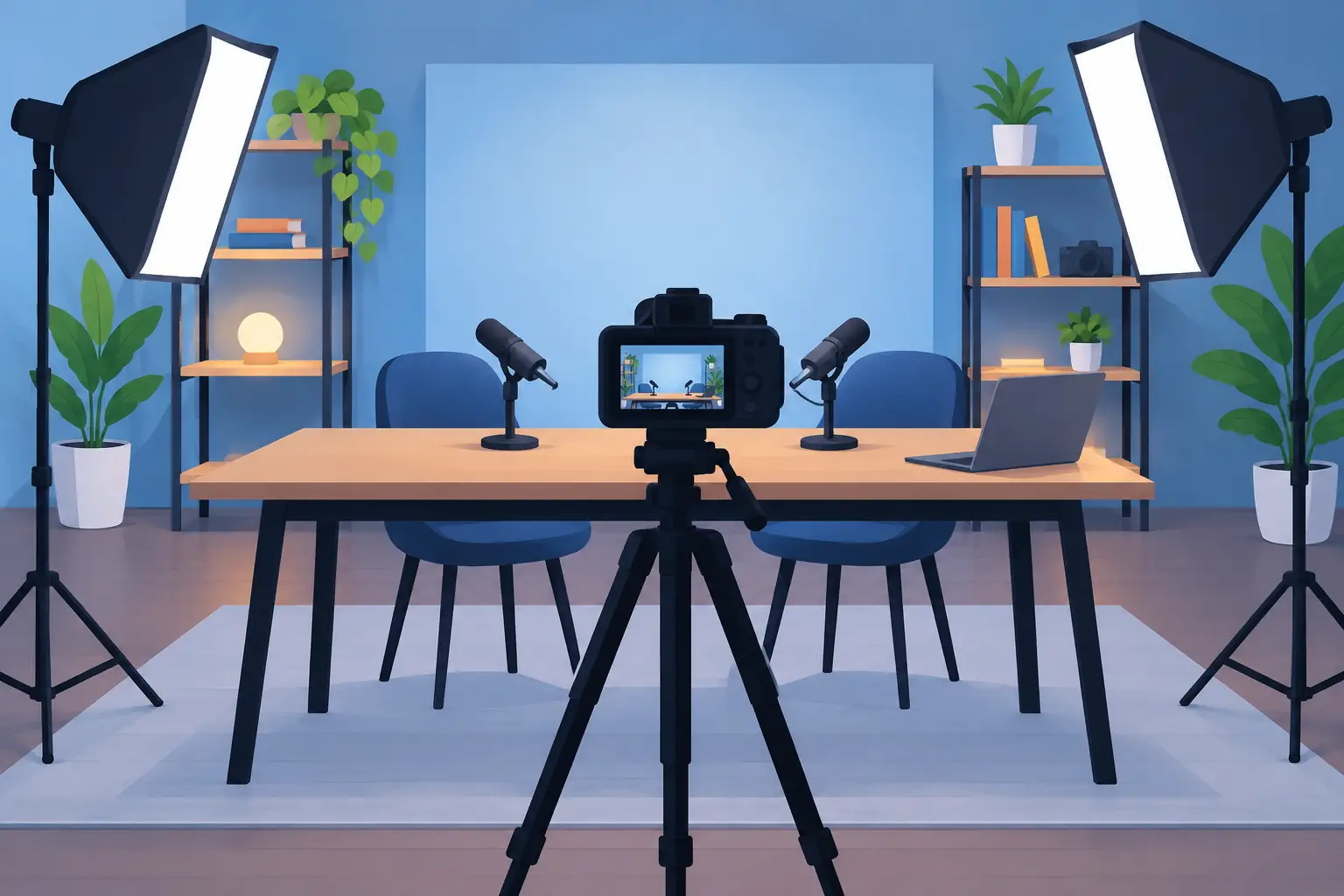
A great livestream studio does more than point cameras at a performer. It gives a live moment enough structure to travel well: clean sound for headphones and speakers, confident framing for viewers on a mobile phone, reliable delivery for people joining from anywhere, and a room where the person on screen can relax enough to be themselves.
That matters whether you are launching a record, hosting a panel, performing a stripped-back set or presenting to customers. A livestream can feel immediate without feeling improvised. The difference is usually made before the first viewer arrives.
Start with the moment you want people to feel
The technical plan should follow the purpose of the broadcast, not the other way round. A four-piece band playing a high-energy live session needs room to perform, mics that can handle volume, considered lighting and camera angles that show the connection between players. A founder announcing a new product may need a quieter setup, a presenter-facing camera, graphics, a confidence monitor and enough space for demonstrations.
Ask what the viewer needs to understand, hear and remember. Is this about the atmosphere of a performance? A useful conversation? A clear sales message? The answer shapes the set, the camera plan and the pace of the show.
Live music benefits from movement and detail: a wide shot that establishes the whole room, closer angles for vocals and instruments, and cutaways that make the edit feel musical rather than busy. An interview needs a different kind of attention. Comfortable seating, flattering key light and a clean audio feed will usually do more for it than constant camera changes.
Why a proper livestream studio changes the result
A home setup can be ideal for a quick update or informal chat. But once the broadcast needs multiple contributors, professional audio, a product demonstration or a performance worth revisiting, small limitations quickly become visible. Room echo, inconsistent lighting, unreliable Wi-Fi and awkward camera placement ask the audience to work harder than they should.
A purpose-built livestream studio brings the essential parts into one workflow: a treated or controllable space, proper microphones, multiple cameras, lighting, monitoring, mixing and a dependable route to the chosen platform. That does not mean every broadcast must look like television. It means the production can be as simple or as ambitious as the idea requires, without sacrificing the basics.
The biggest gain is often confidence. Artists can focus on a take instead of watching battery levels. Hosts can follow a conversation instead of worrying whether a remote guest can be heard. A production team can react to a real moment because the foundations are already in place.
Audio comes first, even when the picture is beautiful
Viewers will forgive a slightly imperfect shot sooner than harsh, distant or distorted sound. For music, that means recording and mixing each source properly rather than relying on a camera microphone. Vocals, guitars, drums, keys and backing tracks need the same care they would receive in a recording session, with a separate mix considered for the livestream audience.
That last point matters. The sound that feels right in the room is not always the sound that translates online. Loud drums can dominate a space while sounding thin in a stream; a vocal that seems present in headphones may need more clarity once data compression is involved. An engineer can build a broadcast mix that retains energy while keeping lyrics, speech and musical detail intelligible.
For spoken content, close microphone placement, sensible gain levels and headphones for remote contributors prevent most avoidable problems. If there is more than one presenter, each person needs to be heard with the same consistency. The audience should never have to reach for the volume control whenever someone turns their head.
Cameras should have a job, not just a position
Multi-camera production is useful when every angle contributes something. A main camera carries the story. A wider angle locates the viewer in the room. Detail shots add intimacy, whether that is hands on a keyboard, a guest reacting to a question or the careful reveal of a product.
Too many angles can make a thoughtful performance feel restless. Too few can make a lively event look static. The right balance depends on the format and the people involved. Planning a simple shot list before the session helps everyone understand where to stand, where to look and when movement will help rather than distract.
Framing also affects how a brand is perceived. A clean, intentional background feels credible. A green-screen setup can be valuable where branded graphics, virtual environments or presentation slides need to sit behind a speaker. For a more human live session, a real room with character may communicate far more than a digitally created backdrop.
Plan the livestream studio session like a live show
Even a short stream benefits from a run-through. It does not need to drain the spontaneity from the event. It protects it. Rehearsing transitions, checking playback clips and agreeing who gives cues means that people can respond naturally when they are live.
Begin with a running order. Include the actual start time, a short pre-show window, introductions, performance or discussion sections, audience questions if relevant, any video inserts and the closing call to action. Allow more time than expected for set changes, retuning, guest introductions and the small technical adjustments that always happen around live work.
For musicians, a soundcheck is also a performance check. Test the arrangement at real playing level and listen back through the broadcast mix. For presenters, use this time to practise looking into the lens, handling notes and moving between sections without breaking the flow. A little preparation removes the stiff, over-rehearsed feeling that people worry about.
At Yougig, a live room, digital mixing and editing suite, and intimate green-screen space can support very different kinds of broadcast from one waterfront setting. The point is not to make every project look identical. It is to give artists, creators and brands the right environment and technical support for the job in hand.
Choose the platform around the audience
The best platform is the one your intended viewers will genuinely use. If you already have an engaged community in one place, broadcasting there may be more effective than spreading attention across several destinations. If the event is designed for internal training or a ticketed audience, privacy, access control and replay arrangements may matter more than public reach.
Streaming to more than one platform can expand visibility, but it adds decisions. Comments need monitoring, calls to action need to work across each destination, and the team needs a clear plan for handling questions. It is often better to run one well-supported broadcast than several half-managed ones.
Think about the replay before you go live as well. A full recording can become a performance film, a podcast episode, a short social clip, a highlight reel or useful website content. Capture clean recordings separately from the live output where possible. That preserves quality for editing and gives you options if a platform compresses the stream heavily.
Build in a safety margin
Live production is about preparation, not pretending nothing can go wrong. Internet connections should be tested well ahead of time, including upload speed and stability. Record locally as a backup. Keep spare cables, batteries and media close by. If a remote guest is involved, arrange a technical check from their actual location rather than assuming it will work on the day.
The same applies to people. Decide who welcomes guests, who watches comments, who calls cues and who makes the final decision if something needs to change. One person can cover several roles on a smaller shoot, but they should not be expected to mix sound, operate cameras and manage audience questions simultaneously.
A contingency plan can be simple: a holding slide, a short pre-recorded clip, an alternative microphone, or a clear message if the start must be delayed. These small provisions give the production room to breathe.
Make the room work for the people in it
The most convincing broadcasts rarely come from people trying to look convincing. They come from performers and presenters who feel prepared, heard and comfortable in their surroundings. Give musicians enough time to settle into the room. Let guests see their framing before the countdown. Keep water nearby, minimise unnecessary people on set and protect quiet moments before the broadcast begins.
A floating studio setting can help here. Away from the rush of a conventional commercial space, the water and coastal light offer a pause before the red light comes on. Yet calm is only useful when it is paired with proper production discipline: sound checked, cameras matched, lights shaped and the stream monitored from start to finish.
Your audience may only see the finished frame, but they will feel the care behind it. Give the live moment a considered room, a capable crew and enough time to breathe, and it has every chance of becoming something people want to stay with and share.