

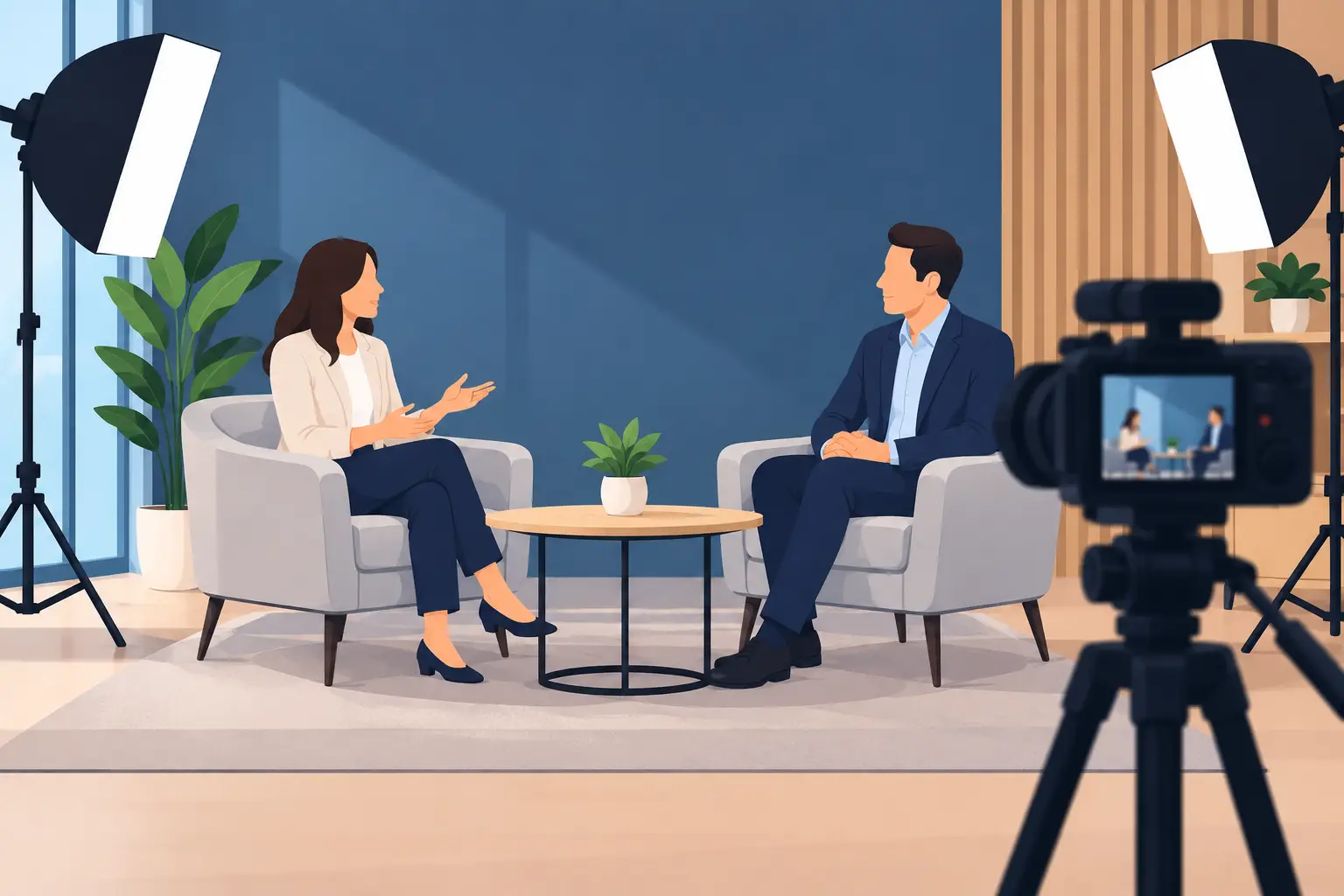
A strong interview can be derailed by something as small as a noisy air conditioner, an uncomfortable chair or a guest who cannot work out where to look. The right interview filming studio removes those distractions before the cameras roll. It gives the conversation room to breathe, while the production team captures every answer with the sound, framing and flexibility needed for a polished final film.
For a founder interview, artist profile, podcast episode, panel conversation or presenter-led campaign, the setting is not just background. It affects how people speak, listen and connect. A studio should feel prepared without feeling stiff: technically capable enough for broadcast-quality delivery, but calm enough that your guest can forget the kit is there.
What an interview filming studio needs to get right
Interview content often looks simple from the outside. Two people sit down and talk. In practice, it is one of the formats where small production choices are highly visible. Viewers notice echo, inconsistent lighting, awkward eyelines and edits that feel like jumps, even if they could not explain why.
Clear audio comes first. People will tolerate a less-than-perfect image for longer than they will tolerate muffled speech or a room full of reflections. A treated recording space, well-positioned microphones and an engineer monitoring levels give the editor clean dialogue to work with. This matters particularly when a guest speaks quietly, laughs loudly, moves in their chair or has a naturally expressive delivery.
Lighting should be shaped for faces rather than simply switched on. A flattering key light, gentle fill and controlled separation from the background can make a guest look relaxed and present without creating a glossy, overproduced result. The best approach depends on the brief. A leadership interview may call for a composed, editorial look; a musician talking about a new release may suit something more textured and informal.
Camera coverage is what makes an interview usable beyond a single long-form edit. A wide two-shot establishes the conversation, while individual angles give the editor places to cut naturally. A close shot can hold a moment of reflection. A wider frame can make room for hands, instruments, products or a more animated exchange. Multi-camera filming also means a powerful answer does not need to be repeated because the other speaker happened to be on screen.
Comfort is a production decision, not an extra
Guests are rarely at their best when they arrive in an unfamiliar room, face a bright light and are told to speak directly to a lens. A good studio team creates a gentler landing. There is time to settle in, check the seating, talk through the format and make sure everyone knows where to look.
This is particularly valuable for first-time presenters, artists more used to performing than being interviewed, and clients discussing personal or complex subjects. The goal is not to make people forget they are being filmed through clever tricks. It is to make the process feel clear, respectful and well held.
The physical space plays a part too. A clinical meeting-room look can be right for some corporate productions, but it is not the only option. A more characterful environment can help conversations feel warmer and more human, provided it does not compete with the subject. Backgrounds need depth, texture and enough visual order to keep attention where it belongs.
At Yougig, the floating studio setting in Shoreham-by-Sea offers a useful balance: a distinctive waterfront atmosphere outside, with controlled recording, editing and green-screen spaces inside. For many guests, stepping aboard changes the pace before the first question is asked.
Plan the conversation before choosing the camera angle
The strongest interview films begin with an editorial purpose, not a shot list. Decide what the audience should understand, feel or do after watching. That decision informs the questions, the set, the camera treatment and the eventual cut.
A short social campaign may need concise answers that work as individual clips, with clean pauses around key lines for captions and titles. A documentary-style conversation may benefit from longer silences, follow-up questions and a more observational visual style. A recruitment film often needs clarity and warmth, while a product interview may need space for demonstrations or cutaway detail.
It helps to share this purpose with the studio team in advance. They can advise on the practical implications: whether the shoot needs one host or two, a remote contributor, a teleprompter, green screen, product close-ups, screen capture or a live audience feed. This is where an experienced production partner can save time. A format that sounds straightforward on paper can require very different lighting, audio routing and camera positions once people are in the room.
Eyeline changes the feeling of the film
Where a guest looks has a major effect on tone. Looking slightly off-camera towards an interviewer often feels conversational and intimate. Speaking straight into the lens creates direct address, which can work beautifully for a message to customers, supporters or an online audience.
Neither is automatically better. Mixing both without a clear reason, however, can feel unsettled. Decide early whether the viewer is meant to feel like a third person in the room or the person being spoken to. That single choice helps the director, interviewer and contributor work from the same plan.
Why multi-camera filming protects the edit
A one-camera interview can be elegant, economical and entirely suitable for a simple, carefully delivered piece. It also asks more of the contributor and the editor. Any stumble, repeated answer or lengthy pause has fewer places to hide.
Multi-camera recording offers practical insurance. It captures reactions, gives natural edit points and lets the conversation continue when a question needs rephrasing. It is especially useful for two-person interviews, panel discussions and podcasts where timing and response are part of the story.
There is a trade-off. More cameras require more setup, monitoring and coordination, so they are not necessary for every brief. But when the film will be cut into a long episode, shorter highlights and vertical social clips, additional coverage often earns its place. It gives the finished content a more considered rhythm without forcing the interview into a rigid performance.
A studio with both filming and post-production capability also keeps that workflow joined up. The people recording the interview understand what has been captured, what the client needs and where the edit can go next. Audio can be cleaned, colour can be balanced, captions can be prepared and versions can be shaped for the platforms that matter to the campaign.
Build a set that supports the person on screen
A set does not need expensive furniture or elaborate scenery to look intentional. It needs control. Colours should suit skin tones and the brand without creating distractions. Props should reveal something useful about the guest, the project or the organisation, rather than appearing as decorative clutter.
For recurring content, consistency matters. The same seating position, framing, lighting and background give a series a recognisable identity. That does not mean every episode must look identical. A well-planned studio can retain a core visual language while adjusting elements for different guests, products or themes.
Green-screen filming is a useful option when the background must change between versions, when branded graphics carry much of the message or when there is no practical way to build the required environment. It requires careful lighting and clean separation around the subject, so it works best when planned from the start rather than added as an afterthought.
Questions to settle before the session
Before booking an interview filming studio, be clear about the number of contributors, intended running time, output formats and whether the interview will be live or recorded. Let the team know if anyone will join remotely, if a guest has access requirements, or if the content includes music, demonstrations or sensitive subject matter.
Bring a question structure, but avoid scripting every answer. The best remarks usually arrive after a follow-up question or an unexpected detail. Leave enough time for sound checks, a quick visual test, natural breaks and a final review of anything that must be said accurately.
If you need several clips from one session, plan for that too. Ask for a mix of broad ideas, specific practical answers and concise standalone statements. A considered hour in the chair can become a useful library of content rather than one film with a short shelf life.
The camera may capture the interview, but the real work is creating the conditions for someone to say something worth hearing. Choose a space that lets your guest settle, your team stay focused and the conversation find its own rhythm.