

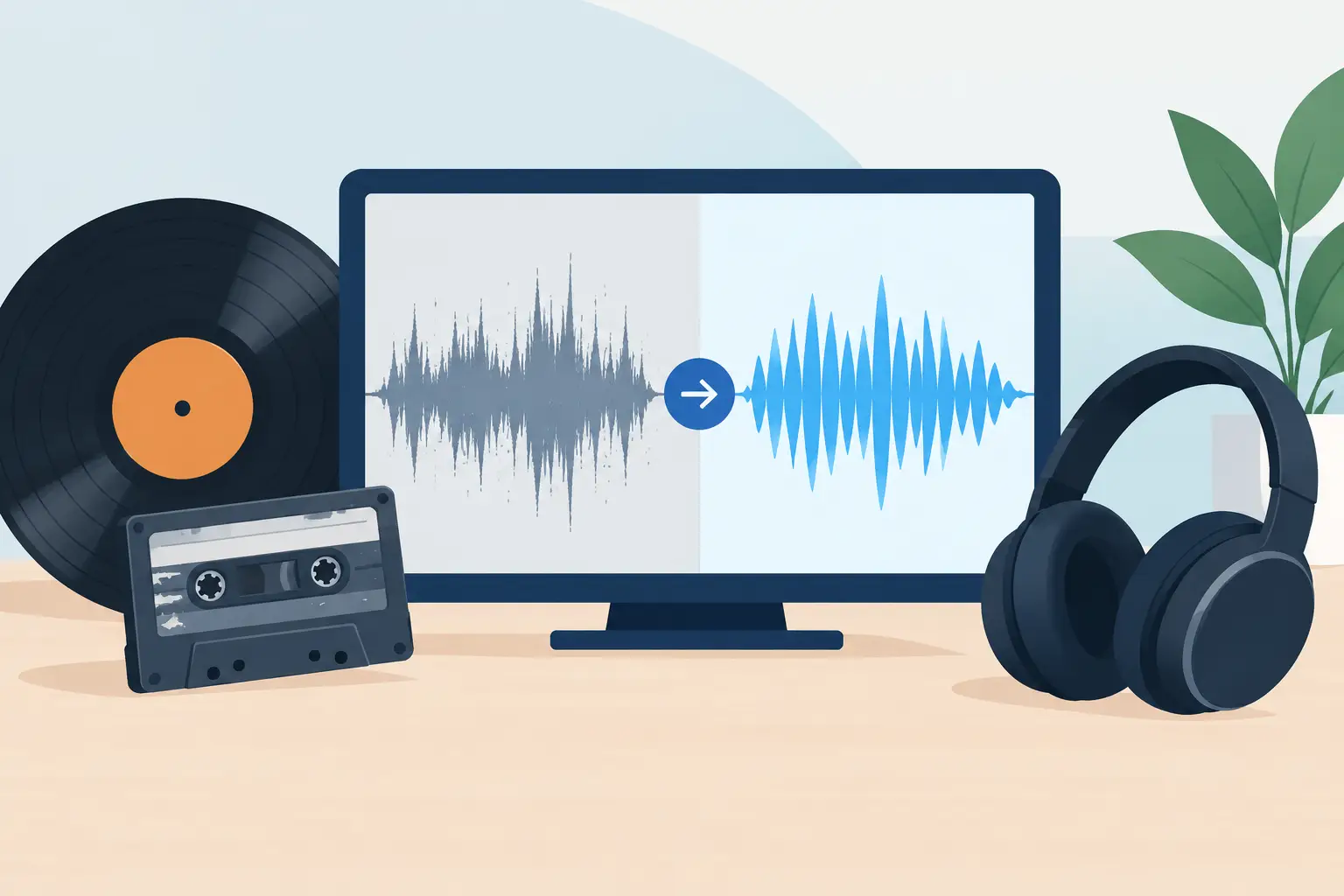
A cassette from a first gig, a reel of a relative telling stories, a vinyl recording of a band that never made it to the studio – these are not just old formats. They are moments that may exist nowhere else. A professional audio restoration service gives those recordings the best possible chance of being heard again, without stripping away the character that made them worth keeping.
Restoration is not about making every archive sound like a current chart release. It is about stabilising fragile material, reducing distractions and revealing what is already there. Sometimes that means a dramatic improvement. Sometimes the right result is a gentle clean-up that leaves a little hiss, hum or room sound in place because removing it further would damage the voice, performance or atmosphere.
What an audio restoration service can actually do
The process begins long before any plug-in is opened. Old media needs to be assessed for its physical condition and played on suitable equipment. Cassettes can suffer from stretched tape, sticky residue, worn pads and damaged shells. Reel-to-reel tape may need careful handling before playback. Vinyl can carry clicks, crackle and groove wear, while old digital files may have low bitrates, clipping or transfer errors already baked in.
Once a clean, high-resolution transfer has been captured, restoration work can address issues such as persistent hum, electrical buzz, broadband hiss, clicks, crackles, dropouts, uneven levels and excessive background noise. Speech recordings often benefit from clearer vocal presence and more even loudness. A live gig recording may need audience noise reduced between songs, low-end rumble controlled and the overall balance brought into shape.
There is a difference between repair and reinvention. If a voice is buried beneath distortion, or a guitar was never recorded clearly in the first place, no honest engineer can promise to recreate every missing detail. Modern processing can be remarkably helpful, but it cannot reliably turn a poor mono cassette into a pristine multitrack session. The value lies in making considered decisions, preserving the original and avoiding processing that sounds impressive for ten seconds but tiring for a full track.
The right restoration depends on the recording
A family interview, a DJ mix from the 1990s and a live band demo have different priorities. For spoken-word material, intelligibility usually comes first. The engineer may reduce steady noise, tame harsh consonants, soften handling sounds and lift quiet sections so listeners are not constantly reaching for the volume control.
For music, the goal is often more delicate. Tape hiss may be less distracting than the watery, swirly artefacts created by aggressive noise reduction. Vinyl crackle can be removed one click at a time in particularly exposed passages, while retaining enough high-frequency detail for cymbals and acoustic instruments to feel natural. With a live recording, some crowd sound can be part of the occasion. Taking it all away may make a real performance feel oddly empty.
That is why a good restoration session includes listening rather than applying one standard chain to every file. The best treatment for a single vocal archive may be entirely wrong for a full band recording. It also helps to decide where the restored audio will be heard. A file intended for a family archive has different delivery needs from a release, podcast extract, film soundtrack or social clip.
What restoration cannot safely fix
Some limitations are physical. Mould, badly creased tape, missing sections, severe tape degradation and deeply worn record grooves may limit what can be recovered. Other problems are embedded in the original recording: clipped digital audio, a microphone placed too far from the speaker, or instruments all captured through one distorted cassette mic.
Careful processing can reduce the impact of these faults, but pushing too hard creates new ones. Speech can start to sound synthetic. Cymbals can become smeared. Quiet passages can pulse unnaturally as software chases the noise floor. A professional result is often one where the listener notices the story or song, not the restoration.
Prepare your archive before it comes into the studio
Do not test a precious tape repeatedly on an old player in the loft. Every pass can add wear, and a machine with dirty heads or poor transport can make matters worse. Keep media dry, away from magnets, direct sunlight and large temperature swings. If a cassette shell is cracked, a reel is shedding material, or a tape smells musty, leave it as it is and flag the condition before transfer.
Gather any useful context too. A note with names, dates, track order, speed, tape format or known faults can save time and prevent incorrect playback. If you have more than one copy, bring them all. One cassette may be less worn in a particular section; one record pressing may have fewer clicks on a favourite track.
For existing digital files, send the highest-quality original available rather than a file forwarded through messaging apps or downloaded from a social platform. WAV or AIFF files are preferable where possible, but an old MP3 can still be worth restoring if it contains something irreplaceable. Keep the original untouched and make restoration work from a copy.
Why the transfer matters as much as the clean-up
The first digital capture sets the ceiling for everything that follows. Playback speed, tape alignment, record stylus condition, gain staging and analogue-to-digital conversion all affect the result. A poor transfer can introduce wobble, noise or distortion that later processing cannot truly remove.
This is particularly relevant with ageing analogue formats. A cassette recorded on one machine may play slightly differently on another, and a reel recorded at an unusual speed needs to be identified correctly. Engineers may make test captures, compare levels and adjust the playback path before committing to the final transfer. It is patient work, but that patience protects material that may have waited decades to be heard again.
At Yougig, analogue-to-digital remastering can sit alongside detailed editing, mixing and mastering in a production environment built for critical listening. That means an archive can be transferred, restored and supplied in sensible formats without treating it as an afterthought between larger sessions.
Ask for a result you can live with
Before work starts, describe what is bothering you most. Is the hiss masking a voice? Are clicks pulling attention from a piano piece? Is the recording too quiet, too boomy or difficult to understand in the car? A clear priority helps guide the decisions.
It is also worth asking for both a restored version and an untouched archival transfer. The clean version is the one you will likely share and enjoy. The flat transfer preserves a faithful digital record of the source, giving you options if restoration tools improve or your needs change later.
Where possible, listen to a short sample before the whole project is processed. This is the moment to say whether you prefer a cleaner sound or a more natural, lightly restored one. There is no single correct amount of hiss, warmth or ambience. There is only the version that serves the recording and the people who will hear it.
A carefully restored recording does more than remove noise. It makes space for the laugh before the chorus, the imperfect first take, the voice of someone no longer in the room. Bring the best source you have, keep expectations honest, and let the history in the recording lead the work.