

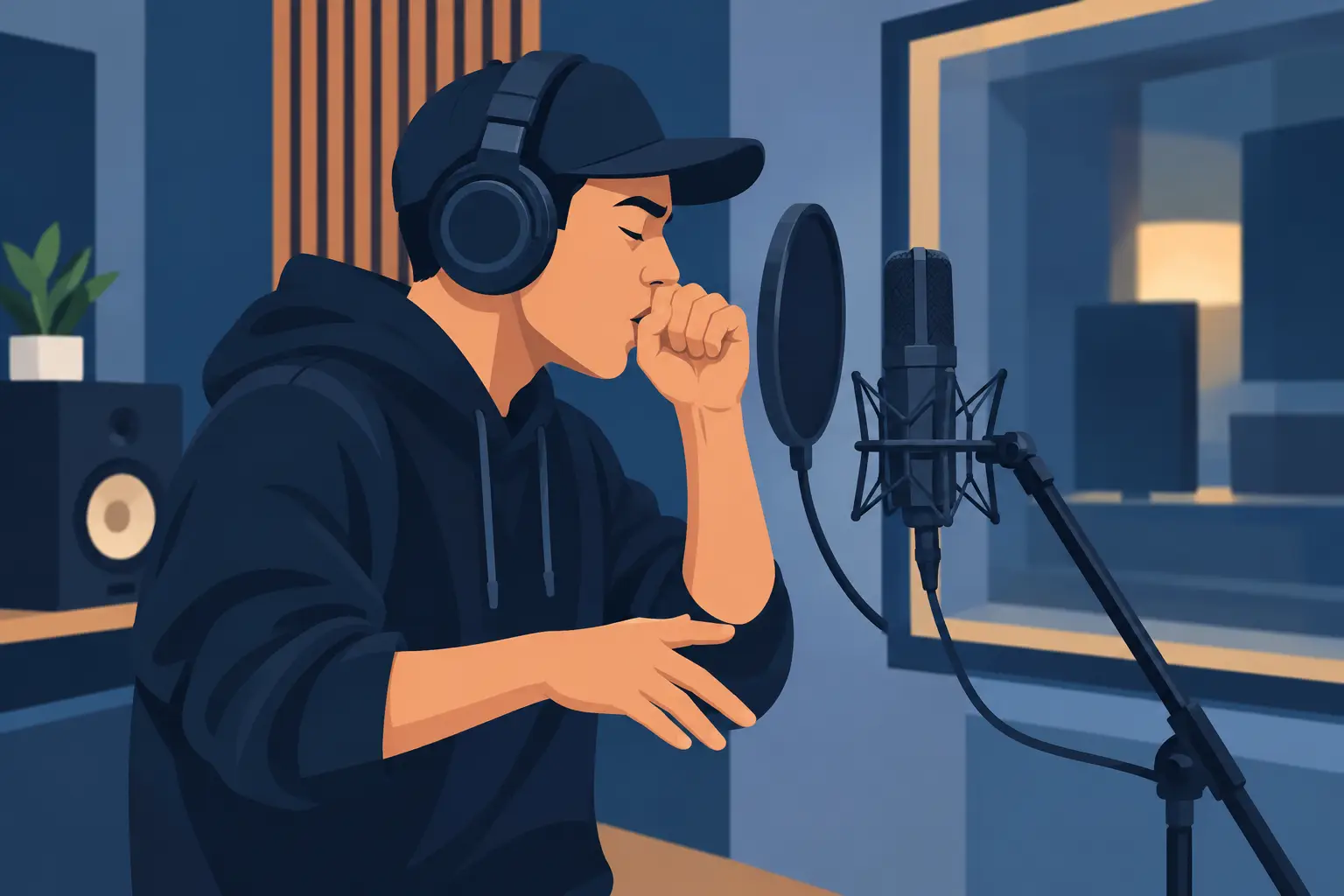
A beatbox recording studio session can expose every detail: the snap at the front of a kick, the air around a hi-hat pattern, the low-end weight of an inward bass and the tiny shifts that make a groove feel human. That is exactly why beatbox deserves more than a quick vocal take on a single mic. With the right room, gain staging and performance plan, vocal percussion can sound huge without losing its character.
For a solo artist, crew or producer building a track around beatbox, the aim is not to make everything artificially clean. It is to capture a confident performance with enough control to shape it later, whether the final destination is a release, a live session video, social content or a full multitrack production.
What a beatbox recording studio needs
Beatbox sits in an unusual place between vocal recording and drum recording. It has the intimacy of a close vocal, but it can create sudden transients and serious low frequencies. A studio that only treats it like spoken word can leave kicks thin. One that treats it like a loud drum kit can lose the mouth detail, breathing and articulation that make the performance recognisable.
The starting point is a properly controlled live room. You want enough space to perform freely and move with the rhythm, without a harsh room reflection returning into the microphone. A dry, focused capture gives the mix more options. Space and character can be added later; unwanted room tone is much harder to remove once it has been recorded.
Good monitoring matters just as much. Beatboxers often change their tone instinctively in response to what they hear in headphones. A clear, comfortable headphone mix helps you feel the sub-heavy elements, catch the timing of loops or backing tracks, and avoid pushing too hard simply to hear yourself.
At Yougig, the large live room and separate digital mixing suite allow the performance and the critical listening to happen in the right places. That distinction is useful: record with energy first, then make careful decisions about edits, balance and polish without rushing the creative moment.
Choose the microphone around the performance
There is no single best microphone for every beatbox artist. Your sound, volume and technique decide the setup. Some performers work extremely close to the grille, using proximity effect as part of their low-end sound. Others need a little more distance to deliver fast patterns, lip rolls and outward snares without overloading the capsule.
A dynamic microphone can be a sensible first choice for an energetic, close-up performance. It handles high sound pressure well and often keeps the capture direct and punchy. A condenser may reveal more texture, breath and high-frequency detail, but it can also pick up more room, mouth noise and explosive consonants. The better option depends on the arrangement and how controlled the room is.
A pop shield is not optional decoration here. Plosives from kicks and bass sounds can create a large burst of air that makes even a good take difficult to use. Positioning the artist slightly off-axis, rather than directly firing air into the microphone, can retain impact while reducing those disruptive blasts.
The engineer should set a safe recording level before the full take begins. Ask the performer to deliver their loudest kick, snare and bass sounds, not just a conversational warm-up. Leave headroom. It is far better to raise a clean recording in the mix than to repair clipped peaks from an otherwise brilliant take.
Try a second mic when the arrangement calls for it
A second microphone can be useful, but it is not automatically better. One close mic may capture the main body of the performance while a second, slightly wider mic adds articulation or natural room depth. This can work well for live videos and stripped-back performances where the viewer should feel the physicality of the set.
The trade-off is phase. Two mics hearing the same source at different distances can weaken the low end if their signals do not align well. An experienced engineer will check this before recording the session, rather than discovering it when the mix is already underway. If the goal is a dense, highly layered production, a clean single-mic foundation is often the most flexible choice.
Record the full performance before building layers
It is tempting to construct beatbox one sound at a time: kicks first, then snares, then hats, then bass. That approach can produce a detailed result, but it may miss the push and pull that makes a live beatbox pattern compelling. Start by recording complete performances from beginning to end.
A full pass captures phrasing, dynamics and transitions naturally. It also gives you a reliable reference when layering. Once a strong master take is in place, you can add focused overdubs where they genuinely improve the track – perhaps a deeper bass phrase, a sharper snare, a vocal hook or a rhythmic texture that would be difficult to perform at the same time.
For loopstation artists, capture a clean direct feed where possible alongside the room performance. The direct signal preserves the exact loop balance created in the moment, while a microphone in the room can retain the live presence and audience-facing energy. Neither version replaces the other. Together, they offer useful choices in the edit.
If you are recording with a producer, agree the session order before the first take. Record the most demanding material while your lips, tongue and breathing are fresh. Leave experiments, doubles and spoken transitions for later. Beatbox can be physically tiring, especially when repeated low-end sounds demand a lot of air support.
Build punch without flattening the groove
Editing beatbox is a balancing act. Tight timing can make a production feel powerful, but excessive correction can turn a personal performance into a sterile grid. Small timing differences between a kick, snare and breath may be exactly where the groove lives.
Start with arrangement. Remove sections that repeat without adding energy, and let the strongest pattern have room to land. Then address obvious distractions: an accidental bump, a clipped breath, a stray syllable or a gap that breaks the rhythm. Detailed edits should support the performance, not replace it.
In the mix, different frequency areas often need separate attention. The kick and bass elements need weight, but uncontrolled low frequencies can swallow the snare and make the whole track feel cloudy. Presence helps clicks, hats and consonant textures cut through, although too much top end can make mouth sounds tiring over a full track.
Compression is useful when it is responding to a purpose. Gentle control can help a beatbox take sit steadily alongside music, while more characterful compression can exaggerate the punch of a live pattern. Push it too far and the natural transient shape disappears. It depends on whether you are making an intimate vocal-led piece, a bass-heavy track or a performance film designed to feel immediate.
A clean recording also makes effects more exciting. Short room ambience can give a dry pattern dimension. Delay can turn a vocal texture into an arrangement element. Creative pitch and formant processing can be brilliant in the right section, but the unprocessed take should still have enough authority to carry the song.
Make the session work on camera too
Beatbox is visual. The audience sees breath control, hand movements, concentration and the moment a complex rhythm locks in. A multi-camera live capture can turn a recording session into material for releases, reels, a performance channel or a pitch to promoters.
Plan the shot around the performer rather than treating video as an afterthought. A close angle can show technique and expression; a wider frame gives movement and a sense of room. If you are working with a loopstation, hands and controls need coverage too. Capture clean multitrack audio separately, then pair it with the strongest visual performance in the edit.
For presenter-led breakdowns, tutorials or artist interviews, a green-screen setup offers another route. You can film a short explanation of your sound design or process alongside the main performance, then create visual assets that feel connected rather than generic.
Arrive ready, leave with options
Bring reference tracks, a clear idea of your intended release format and any backing sessions or loop files you plan to use. If you rely on a particular handheld microphone, pedal or loopstation, bring it and mention it before the session so the routing can be prepared. A short soundcheck is the right time to test distance, level and monitoring, not when the best take is already happening.
Most of all, leave room for one unexpected pass. The take after the planned take is often where a beatbox artist stops analysing technique and simply performs. Give that moment a well-prepared room, a trusted engineer and enough recording time to let it happen.