

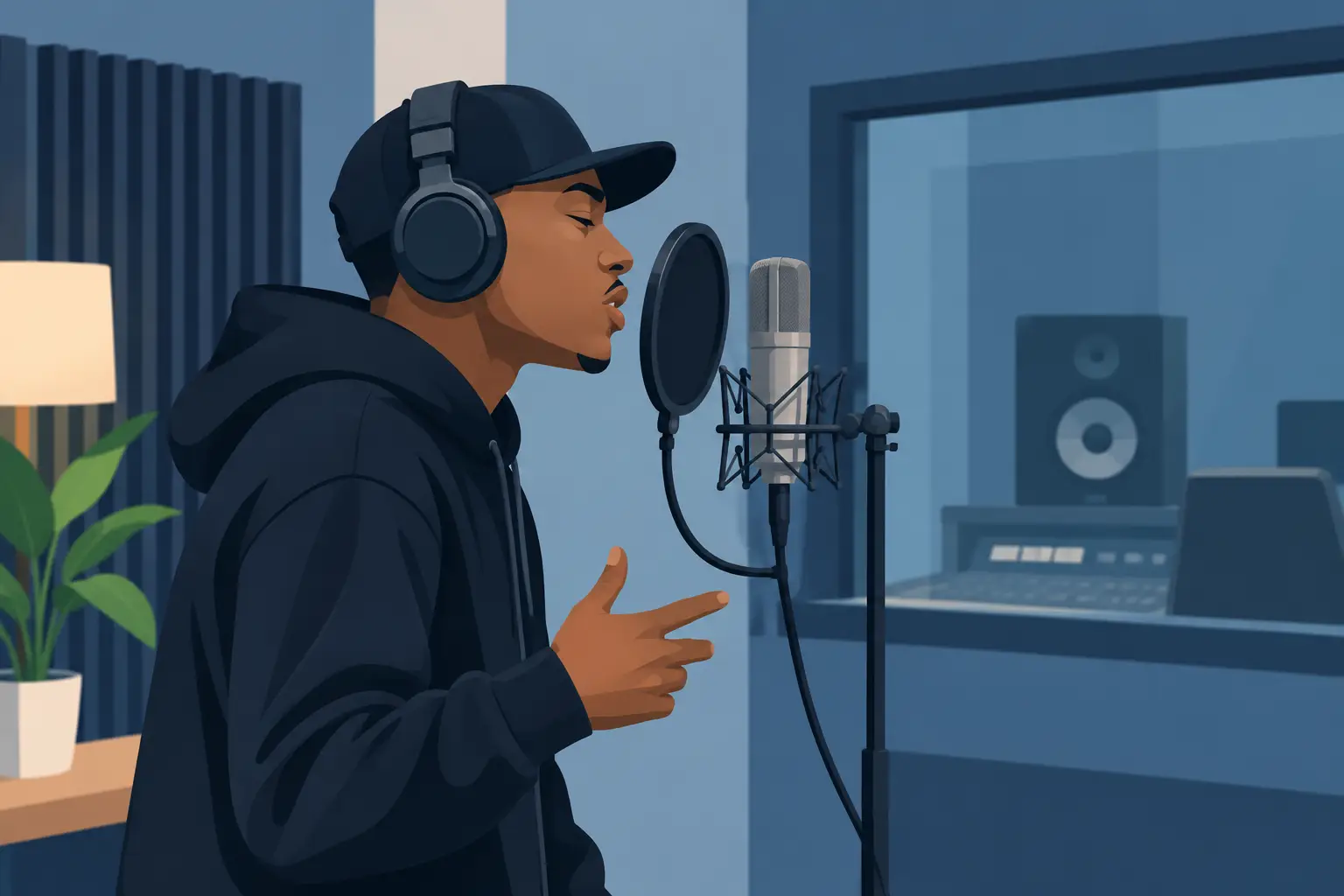
A rap vocal can have the sharpest bars, the right beat and a delivery that owns the room, then still lose impact if it is recorded in the wrong space. If you are working out where to record rap vocals, start with the performance you want listeners to feel: close and conversational, aggressive and upfront, spacious and melodic, or layered into a full hook. The room matters because it affects not only the sound of the take, but whether you can settle in, find your pocket and record enough versions to make the final vocal undeniable.
For most artists, the choice comes down to recording at home, hiring a basic room, or booking a studio with an engineer. None is automatically right. The best option is the one that gives your voice a clean signal, your session enough time, and your ideas a proper chance to land.
Where to record rap vocals: start with the song
Before choosing a space, listen to the instrumental without rapping over it. Is the beat already busy in the midrange? Does the chorus need stacked harmonies? Are you delivering fast verses with lots of consonants, or a deeper, more melodic vocal that needs warmth? These details determine what you need from the room and microphone.
A raw drill verse may benefit from a close, dry recording that keeps every word precise. A sung rap hook might need several doubles, ad-libs and a wider sense of space. In both cases, the goal is usually not to capture the sound of the room. It is to capture your voice clearly enough that you can shape it later with compression, EQ, tuning where appropriate, and effects.
That is why a quiet, treated recording area is more useful than a large empty room with impressive-looking walls. Bare surfaces throw reflections back into the microphone. Those reflections can make vocals sound boxy, brittle or distant, particularly once the track is made louder in the mix.
Recording rap vocals at home
Home recording is ideal when writing is still moving quickly. You can punch in a new line at midnight, try five hook variations, and record guide vocals while the energy is fresh. It is also the least expensive route if you already own a microphone, headphones and interface.
The trade-off is control. Bedrooms and living rooms are rarely designed for vocal recording. Traffic, boilers, computer fans, neighbours and hard walls all find their way onto a take. A duvet behind you can reduce reflections, but it cannot create proper isolation or turn a noisy room into a studio.
If home is your only option, work close to the microphone with a pop shield, keep the gain sensible, and use closed-back headphones so the beat does not spill into the vocal track. Record when the house and street are at their quietest. Avoid standing in the middle of an untreated room, and do not assume a plug-in can remove every echo after the fact.
Home takes can absolutely become finished records, especially when the performance is strong and the setup is thoughtful. But if you repeatedly find yourself battling noise, re-recording verses, or struggling to make vocals sit with professionally produced beats, the room may be the limiting factor rather than your ability.
Rehearsal rooms: useful, but not always a vocal booth
A rehearsal room can be brilliant for developing a live set, testing delivery at volume, working with a DJ, or catching the chemistry between an MC, singer and producer. It gives you permission to be loud, which is valuable when a song needs physical energy rather than a polite headphone performance.
However, a rehearsal room is not automatically the best place to cut a lead vocal. Many are designed to withstand loud instruments rather than provide a dry, detailed vocal sound. If you are recording there, ask whether there is a separate treated vocal area, what microphone and monitoring are available, and whether the room has an engineer who understands vocal gain staging.
The distinction matters. A rough live capture may be exactly what you want for social content, a performance video or a demo. For a release-ready single, you will often get a better result by rehearsing hard first, then moving into a dedicated recording setup for the final takes.
Why a professional studio changes the session
A good recording studio is not just a nicer room with a more expensive microphone. It is a place designed to remove friction. You should be able to hear the beat properly, deliver without worrying about interruptions, and make fast decisions while the feeling is still there.
An experienced engineer also hears problems early. They can position the microphone for your voice, set levels that leave room for sudden emphasis, catch mouth noise or plosives before they become a nuisance, and create a headphone mix that helps you perform. If your timing drifts, they can punch sections without breaking momentum. If a particular word needs more force, they can help you capture an alternative rather than trying to rescue it later.
For artists who record their own vocals regularly, this support can be the difference between one acceptable take and a proper collection of options: main vocal, doubles, clean ad-libs, whispered layers, hook harmonies and alternate last bars. Choice is what gives a mix character.
At Yougig, artists can step aboard a calm Shoreham-by-Sea recording environment with a large live room, dedicated digital mixing suite and hands-on engineering support. It is a useful fit when you want the focus of a professional session without the clinical feel that can make a first recording day feel stiff.
What to look for when booking studio time
Do not choose solely by the microphone list. The best microphone is the one that suits your voice and is being used well. Instead, ask practical questions about the whole session: whether engineering is included, how long setup takes, whether you can record multiple takes and layers, and what happens after the session.
You may only need a clean multitrack recording to send to your own producer. Or you may want mixing and mastering handled in the same place, so the person shaping the vocal understands the performance from the start. Neither route is better across the board. The right choice depends on your budget, how finished the beat is, and whether you already have a trusted mix engineer.
It also helps to ask about video. A well-shot performance clip, multi-camera live take or simple artist interview can give a release more life than a static upload. If visual content is part of the plan, recording audio and filming in one session keeps the vocal performance connected to the image rather than asking you to recreate it weeks later.
Come prepared, but leave room for instinct
Bring the highest-quality version of your instrumental, ideally WAV rather than a compressed file. Bring a reference track or two if you have a particular vocal character in mind. Have your lyrics accessible on your mobile phone or printed out, and mark places where you expect to double, pause or switch flow.
Still, do not script every breath. Rap records often get their best moments from a changed inflection, an unplanned ad-lib, or the take you try after saying, “One more, but calmer.” Give yourself enough booking time to warm up, test the headphone balance and record more than the first usable version.
Hydrate before you arrive, avoid anything that dries your throat, and take short breaks before fatigue starts flattening your delivery. If the track is emotional or technically demanding, record the hardest sections while your voice is fresh. You can always return for ad-libs once the main performance is safely captured.
The room should make you want to perform
The answer to where to record rap vocals is rarely a postcode alone. It is the combination of quiet, acoustic control, dependable equipment, enough time and a person behind the desk who understands that rap is built from detail. Every breath, clipped consonant and half-spoken ad-lib has a job to do.
Choose a space that lets you stop thinking about the room. When the headphones feel right and the take is running, you should be free to concentrate on the only thing the listener will remember: whether you meant every line.