

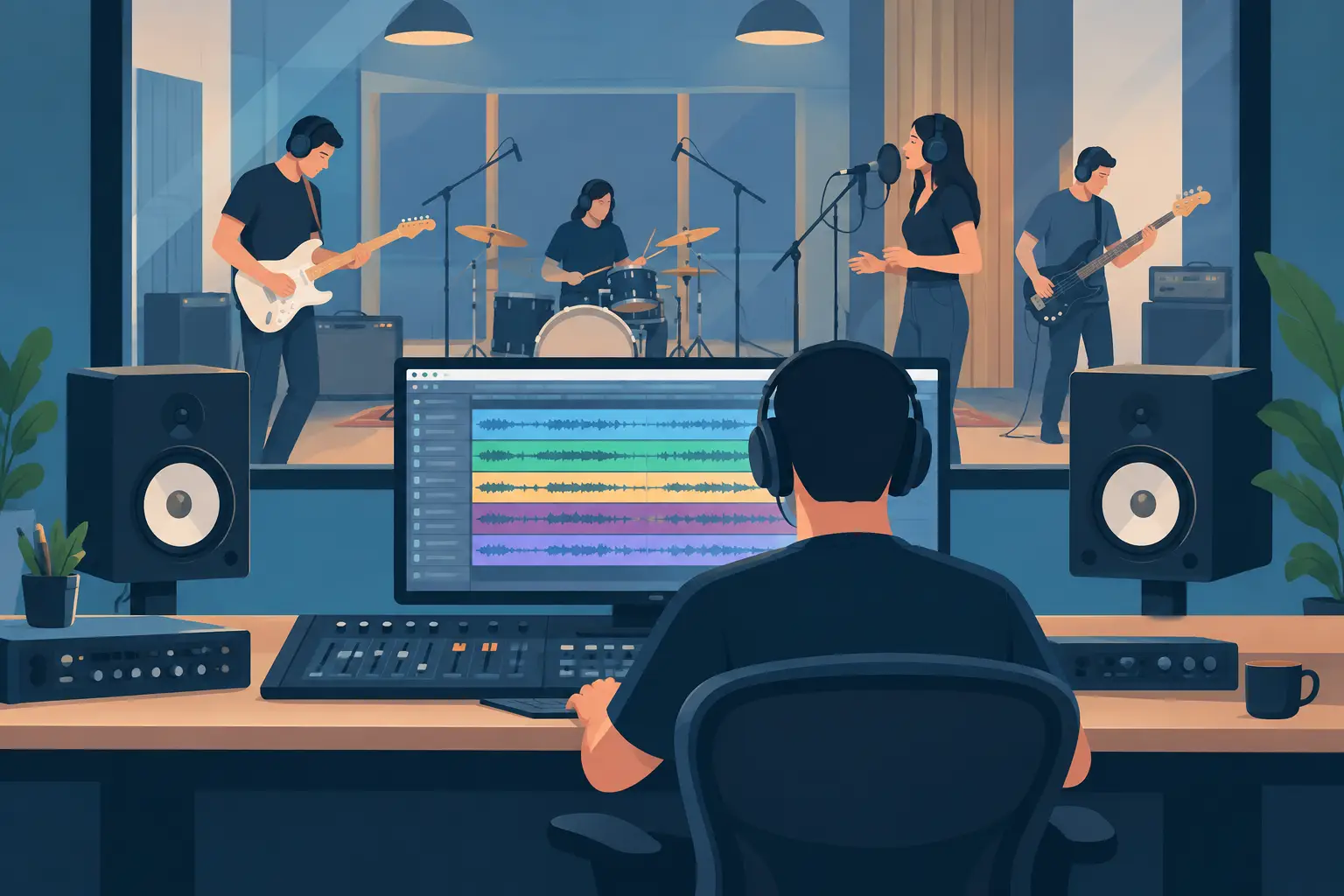
A great take can disappear surprisingly quickly when the drummer cannot hear the vocal, the guitarist changes amp settings between songs, or nobody has agreed what the finished track should feel like. This multitrack recording studio guide is for artists who want the session to stay musical while every part is captured cleanly enough to shape later.
Multitrack recording is not simply pressing record on more microphones. It is a way of giving a performance room to breathe. Each instrument, voice and sound source is recorded to its own channel, so levels, tone, timing and effects can be refined after the players have left the live room. Done well, it preserves the energy of playing together without forcing you to live with every decision made in the moment.
What multitrack recording gives you
Recording a band to a single stereo file can be exciting, immediate and perfectly right for a stripped-back performance. But it also commits you to the balance, sound and mistakes captured on the day. If the cymbals are too loud or a brilliant vocal take has one line that needs replacing, there is very little room to manoeuvre.
A multitrack session keeps the separate ingredients available. A typical band recording might include individual drum mics, bass, guitars, keys, lead and backing vocals, plus room mics for a sense of space. A rapper may need a lead vocal, doubles, ad-libs and a stereo beat. A podcast may need separate microphones for every guest, a remote contribution and a clean recording of its music bed.
That flexibility is valuable, but it does not mean every track needs endless correction. The best results usually begin with a compelling performance and thoughtful sounds at source. Editing and mixing should support the character of the session, not try to invent one after the fact.
Choose the right multitrack recording studio setup
Start with the project, rather than a fixed list of equipment. A four-piece playing live needs enough isolation and sensible sightlines, while an intimate vocal session may benefit more from a quiet booth, a comfortable control room and time to explore delivery. If video matters too, ask how cameras, lighting and playback will work before the day begins.
Live room, control room and comfort
A good live room lets musicians hear and see each other naturally. That matters particularly for drums, loud guitar amps, beatboxing and rhythm-led performances, where the interaction between players is often the thing worth capturing. Isolation can help control spill between microphones, but too much separation can make a band feel disconnected. The right balance depends on the arrangement and whether you want a tight, produced sound or the atmosphere of a live performance.
The control room is where decisions become clear. It should be a place where the artist and engineer can listen critically without the pressure of standing beside a drum kit. Do not underestimate comfort either. A calm setting, daylight, space to take a breath and a welcoming engineer can be the difference between a competent vocal and the take everyone remembers.
At Yougig, the floating studio setting brings that contrast together: a proper live room and digital production suite, with the coast outside the door rather than another anonymous industrial unit.
Enough inputs, and the right monitoring
Before booking, count what must be recorded at once. A close-miked drum kit can use eight to twelve inputs before bass, guitars, keys and guide vocals are added. You do not always need to record every instrument live, but knowing the limit early prevents an awkward compromise once the room is set up.
Headphone monitoring deserves the same attention. Each performer needs a clear cue mix with enough of themselves and the rhythm section to play confidently. Vocalists often want more of their own voice and less cymbal. Drummers may need a strong click and bass. Give the engineer a simple description of what helps you perform, then allow a few minutes to get it right.
Prepare before you press record
Studio time is most productive when the creative choices have already begun at rehearsal. You do not need to remove all spontaneity, but you should know the songs, their keys, their tempos and who is responsible for each part. Bring reference tracks if you have them, not as rules to copy, but as a useful way to explain the weight, intimacy or energy you are chasing.
Fresh strings, charged pedals, spare drumsticks, leads, batteries and a properly maintained instrument all save time. A buzz from an amp, a rattling snare or a tired guitar string can become much more obvious under a sensitive microphone. It is worth solving those practical issues before the red light is on.
If you are recording to a click, rehearse to one beforehand. The click is not a test of whether you are a real musician. It is a timing reference that makes overdubs, edits and video cuts easier. Equally, not every song needs it. A rubato piano-and-vocal recording or a deliberately loose live session may sound better without a rigid grid. Decide that artistically, rather than by default.
A practical multitrack recording studio guide for the day
Arrive with a running order, but leave enough space for soundchecking and the unexpected good idea. The first hour often sets the tone for everything that follows. Use it to place microphones, build headphone mixes, check tuning, set gain levels and record a full rehearsal pass. That pass may become the keeper, so treat it as a performance rather than a disposable test.
For a band, record a strong foundation first. Drums and bass usually define the feel, with guitars, keys and guide vocals helping everyone navigate the arrangement. If the players are tight and the room has enough control, recording together can produce a natural push and pull that overdubbing cannot quite replicate.
Once the core take is secure, listen back before rushing into fixes. Make notes on any sections that need attention, then record only what is needed. Punching in a verse, adding a harmony or replacing a single guitar line is normal. Re-recording every part repeatedly can drain the life from a track and consume the time intended for vocals or creative production.
Vocal sessions benefit from clear emotional direction. Rather than saying, “do it again”, decide what needs to change: more restraint in the first verse, a cleaner consonant, more aggression on the final chorus, or a closer, conversational tone. Record full takes where possible, then capture targeted alternatives. This gives the editor useful choices without exhausting the singer.
Back up the session as you go. Confirm how the files will be stored, named and supplied after recording. A well-organised multitrack session has labelled channels, consolidated audio where required and notes about song versions, takes and edits. These details may seem unglamorous, but they make mixing faster and protect the work you have paid to create.
Plan for mixing, video and release
The recording session is only one stage of the result. Mixing balances the tracks, shapes tone, places sounds in the stereo field and builds the contrast between sections. Mastering then prepares the finished mix for consistent playback across streaming platforms, downloads, broadcast or physical formats. If you are working to a release date, leave time for both. Last-minute mastering is rarely where a track gets its best treatment.
If you want live video, tell the production team while planning the audio session. A multi-camera shoot needs consideration of camera positions, lighting, performer movement and whether the final audio will be mixed from the multitrack recording rather than the cameras’ scratch sound. That planning allows a performance video to feel immediate while still sounding polished.
The same principle applies to social clips, interviews and livestreams. Audio, picture and audience experience are connected. A clean vocal recording, a sensible backdrop and dependable monitoring will carry more impact than a complicated setup that distracts everyone from the message.
Book the room that suits the performance, prepare the parts well enough to be present, and make space for the moments that cannot be rehearsed. The strongest multitrack sessions do not feel like a technical exercise. They feel like your music finally has enough room to be heard.