

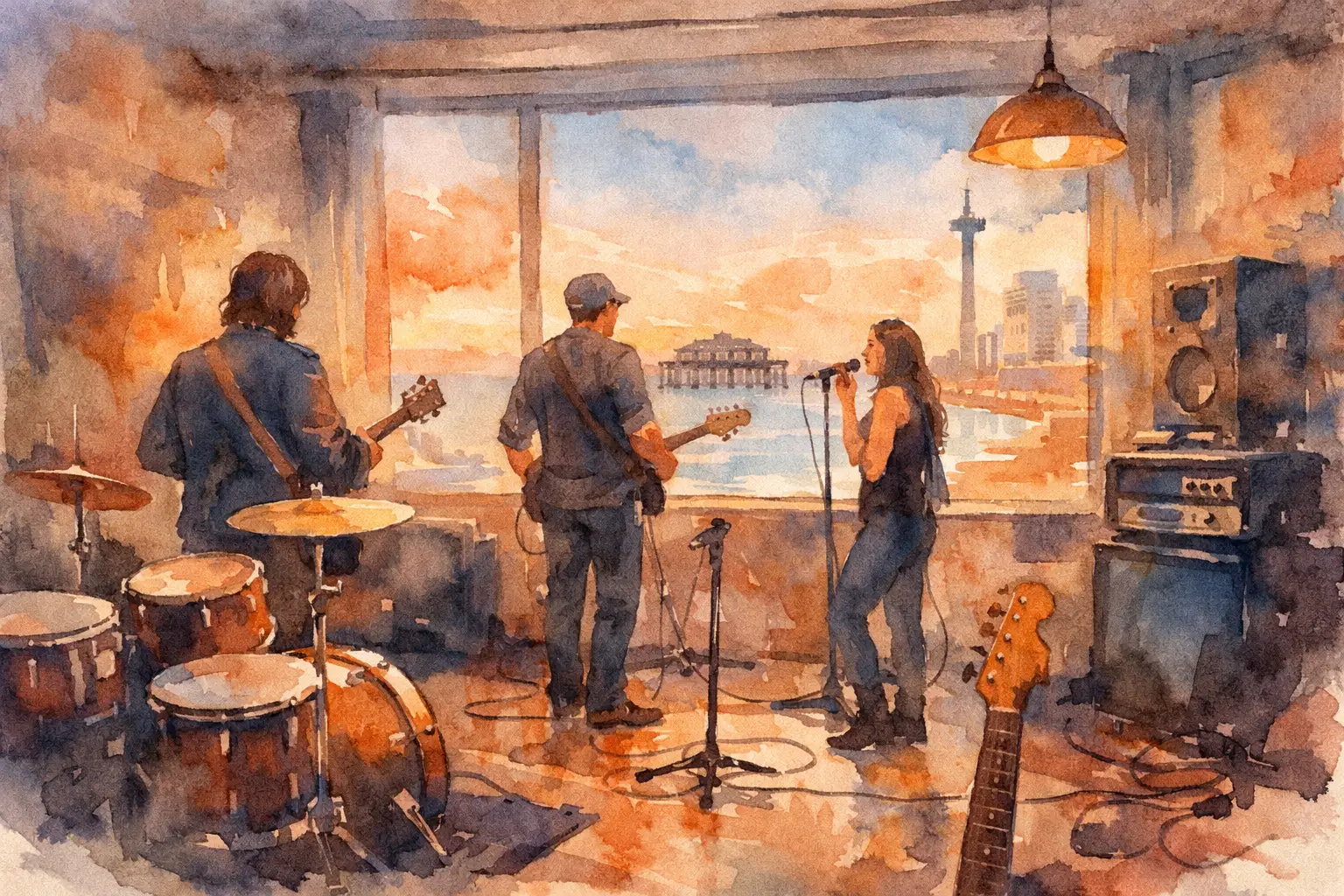
A good rehearsal should leave your band tighter, not merely louder. Yet it is easy to spend three hours in a room that is too cramped, too harsh-sounding or too fiddly to set up, then head home knowing the songs never really had a chance. Choosing the right band rehearsal space in the Brighton area musicians can rely on is about protecting the useful part of a session: the moment everyone locks in and the set starts to breathe.
For a new group, that may mean an affordable room where you can work out arrangements without watching the clock. For a gigging band, it may mean enough space and volume to run a full set as you intend to play it. If you are preparing to record content, release a live session or audition a new player, the best room is one that supports performance as well as practice.
What a Band Rehearsal Space in Brighton Needs to Deliver
Brighton has no shortage of musical energy, from independent songwriters and electronic producers to loud guitar bands, brass players and vocal-led projects. That variety matters when choosing a room. A space that suits a two-piece writing quietly may not work for a six-piece trying to hear kick drum, bass and vocals at gig level.
Start with the practical question: can every player hear what they need to hear? This is not the same as making everything louder. In a useful live room, the drum kit has room to speak, guitar amps can be positioned sensibly, and vocals do not have to fight their way through a wall of cymbals. Thoughtful room layout and sensible monitoring make rehearsals less fatiguing, which usually leads to better decisions about timing, dynamics and arrangement.
Acoustics are part of that equation. A completely dead room can make a band play cautiously, while an uncontrolled, reflective room can turn detail into mush. The aim is a balanced environment where you can hear whether a chorus genuinely lifts, whether the bass is sitting with the kick, and whether a vocal line is reaching the back of an imagined venue.
Space is equally important. It is tempting to book the smallest room that technically fits everyone, especially when budgets are tight. But a little breathing room changes the atmosphere. Players can move, stands can be placed properly, cables do not become trip hazards, and the band can see each other. For groups built around cues, tight endings or live energy, eye contact is part of the arrangement.
Choose the Room Around the Session
Before booking, decide what success looks like at the end of the day. “We need to rehearse” is a starting point, but it is not yet a brief. Are you learning material, refining a support set, rebuilding after a line-up change or preparing for a filmed performance? Each needs a slightly different approach.
Writing and arranging sessions
When songs are still taking shape, comfort and time often matter more than absolute volume. You need a space that lets people stop, try another key, test a new groove and talk through an ending without feeling rushed. Bring a simple way to capture ideas, even if it is just a mobile phone recording from the middle of the room. Those rough takes are often more useful than memory the following week.
Full-set run-throughs
If a show is approaching, rehearse like the show matters. Run transitions, count-ins, tuning changes, backing-track cues and the awkward twenty seconds between songs that can make a confident band look uncertain on stage. Give yourselves at least one uninterrupted pass through the set. Stopping for every small mistake feels productive, but it can hide problems with stamina, pacing and communication.
A room with a proper PA and appropriate amplification helps here, particularly where lead vocals, harmonies or electronic elements carry the identity of the music. Confirm what is included before you arrive, though. “Backline available” can mean very different things from one venue to another.
Content and pre-production rehearsals
Some rehearsals have a second job: finding a take worth keeping. This is where a production-capable room becomes valuable. If you may want to record a multitrack performance, shoot a live video or livestream a set, the rehearsal should be planned with that possibility in mind. Cable routes, sightlines, lighting and microphone positions all affect how easily the session can become finished content.
At Yougig, the waterfront setting in Shoreham-by-Sea offers that useful crossover: a large live room for getting loud and settled, alongside recording, multi-camera video and livestream production when the material is ready to travel beyond the rehearsal itself. It is a practical option when a band wants to move from “we think this is working” to a polished live document without rebuilding the whole setup elsewhere.
The Questions Worth Asking Before You Book
The most useful rehearsal spaces are clear about how they work. You should know the access time, permitted rehearsal hours, what equipment is supplied, whether you can bring your own amps and drums, and how the room is shared or isolated from other activity.
Ask about the PA in real terms. How many vocal microphones are available? Are mic stands, leads and monitors included? Can you connect playback from a mobile phone, laptop or interface? If your set uses tracks, in-ear monitoring, samples or keyboards, check the connections rather than assuming they will be there.
It is also worth asking whether setup and pack-down sit within the booking. They usually do, and that is fair, but it should shape how you schedule the session. A three-hour booking is not three hours of playing if six people arrive late, build a complicated rig from scratch and spend the final twenty minutes coiling cables. Arrive with a plan, assign simple jobs, and agree the first song before the drummer has put the hi-hat together.
Noise limits are another sensible conversation. A professional rehearsal environment should allow bands to work at a realistic level while protecting neighbours, staff and everyone’s hearing. The answer may be a sensible volume policy, better amp placement, drum control or ear protection. None of those compromises means sacrificing energy. In fact, a band that learns to create impact without sheer volume tends to sound more controlled on stage and in the studio.
Make Paid Rehearsal Time Count
Rehearsal rooms are at their best when they remove friction, but the band still needs a process. Start with the difficult material rather than warming up for an hour on songs everybody already knows. Record one complete run of the problem section, listen back together, make a specific change, then play it again. Vague feedback such as “it feels off” can be useful emotionally, but it needs translating into something playable: the tempo is dragging, the second guitar is masking the vocal, or the bridge needs a clearer cue.
Agree who has the final call when opinions split. It does not have to be the same person on every subject. A singer may lead lyrical phrasing, a drummer may call a groove issue, and the player handling tracks may own technical cues. Clear ownership keeps creative disagreement productive rather than personal.
Leave ten minutes at the end to capture what changed. Note the final keys, tempos, arrangements and any jobs for next time. If you are preparing for a recording session, list the parts that need tightening and the sounds you want to preserve. This small habit prevents each rehearsal from beginning with a conversation about what happened at the last one.
Think Beyond the Practice Room
The right Brighton-area rehearsal space can be more than somewhere to make noise for an evening. It can be a place to test whether your material works in a real room, get comfortable performing together and create a bridge towards recording or filmed live content when the timing is right.
There is a trade-off, of course. A basic room may be all you need for early writing, while a studio environment can be the smarter use of money when your set is already strong and you want to leave with audio or video that represents it properly. Book for the stage your project is actually at, not the version you feel obliged to present.
When the room is comfortable, the sound is honest and everyone can hear one another, rehearsal stops being a necessary chore between gigs. It becomes the place where a band learns what it sounds like when it means it.